Why the Legislature, the Judiciary and the Executive Must No Longer Defend the Marital Rape Exception
Justice Shakdher found the exception arbitrary, Justice Hari Shankar upheld it, and the Supreme Court now has a batch of petitions while Parliament has ignored the Verma Committee since 2013
Published on: 29 September 2026, 01:12 pm
A 2015 BBC REPORT on the victims of marital rape in India starts with the harrowing account by a 25 year old woman, “I was only a toy for him which he thought he could use differently every night. Whenever we had a fight, he would take it out on me in bed. He would not take a no for an answer not even during my periods.”
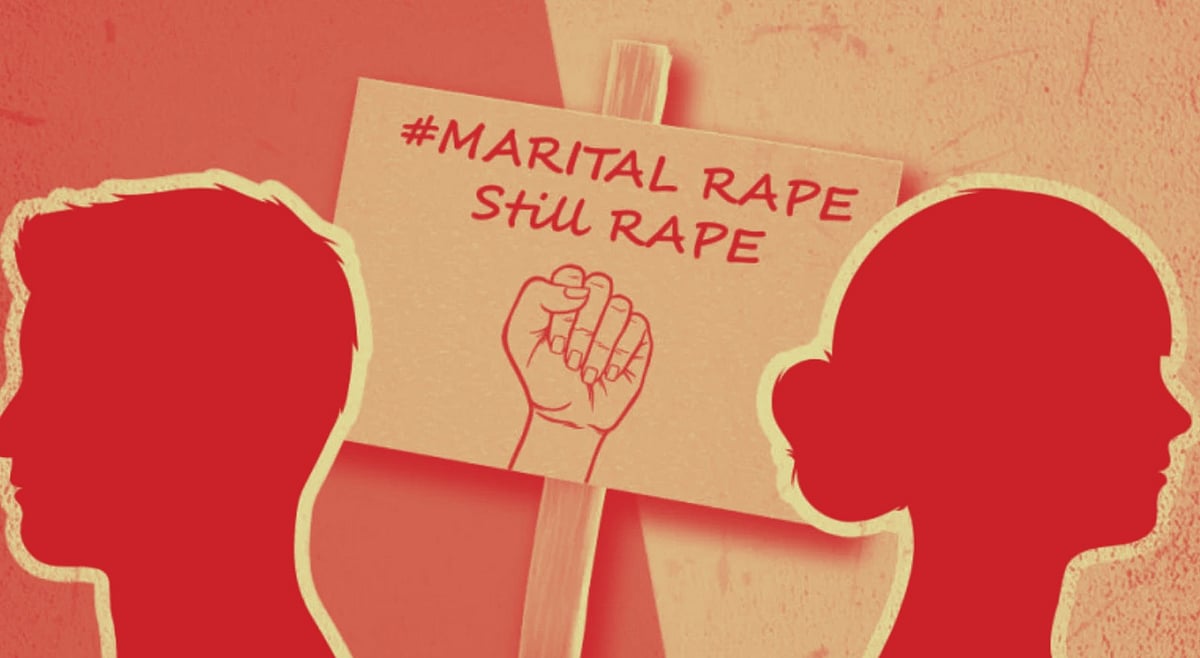
The act of rape generally attracts a significant amount of outcry from the people at large with sections of society being terribly outraged and nauseated with the recurring occurrence of such ghastly crimes depending upon their severity. But on the contrary when it comes to marital rape there is no such collective outrage nor even concerns expressed by influential sections of society. The same concepts of violation of consent and bodily autonomy forming the core pillars of jurisprudence on the crime of rape undergo a dilution when the exact act of non-consensual sex is placed within the framework of a marriage.
The Supreme Court has before it a batch of petitions on the vires of the marital rape exception. Four arise from the reference made after the Delhi High Court delivered a split verdict in RIT Foundation v. Union of India (2022).
The law on marital rape is outdated
The common law doctrine of coverture was a recognised principle in Britain as per which a female had no independent legal identity and standing. According to the doctrine, her father’s identity mirrored her identity before marriage and post marriage her identity merged with that of her husband, resulting in the absence of recognition of any property rights or bodily autonomy or custody rights. As a result, the recognition of all these rights remained contingent upon the will of the husband. In the United Kingdom, it was much later in 1991 that the House of Lords in the case of R v. R struck down the marital rape exception as it went on to uphold the equality of both the spouses in a marriage. The House of Lords relied on the Scottish decision in S v. H.M. Advocate (1989) which led to the removal of spousal immunity against the offence of rape. This ousted the doctrine of coverture from being recognised as a legitimate common law principle and statutorily being removed in 1994 in the UK.
In India Section 375 of the Indian Penal Code (‘IPC’) and Section 63 of the Bhartiya Nyaya Sanhita (‘BNS’) lay down constitutes as rape. The sections comprise two instances where the act would not be considered to be rape. The first being the carrying out of a medical procedure or intervention and the second being ‘sexual intercourse or sexual acts by a man with his own wife not below 18 years of age’. The second exception fails to address whether the nature of such a sexual intercourse or sexual act by a man with his major wife should be viewed from the axis of it being consensual or non-consensual. The exception has been retained by the BNS which came into force in 2023 replacing the earlier IPC of 1860 in an effort to “decolonise” the criminal laws.