Justice Gavai’s ‘Parasites’ remark betrays the Constitution’s welfare ethos
Two months ago, the Supreme Court, itself, dismissed a series of petitions challenging the insertion of ‘socialist’ and ‘secular’ into the Constitution, ruling that the document envisaged a “welfare State" committed "to ensuring equality of opportunity." In a country where inequality has reached unprecedented levels of misery, Justice B.R. Gavai’s oral remarks seriously undermine the Constitution’s promise to the masses.
Published on: 23 February 2025, 05:49 am
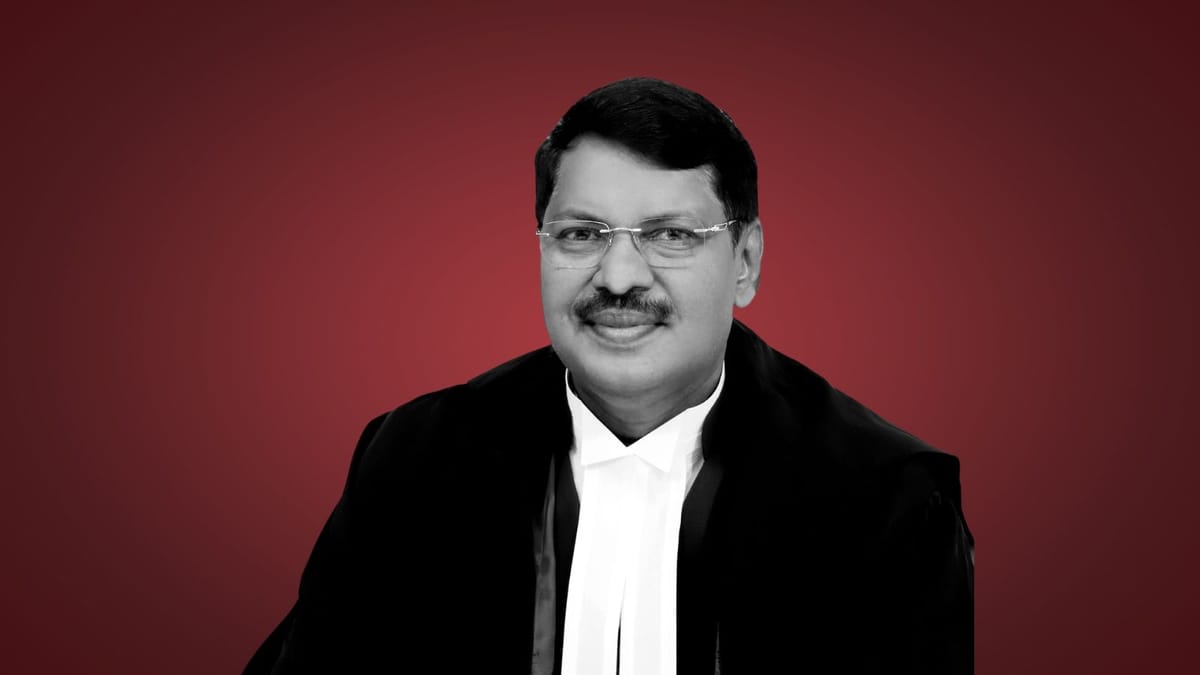
ON February 12, 2025, while hearing civil writ petitions concerning the implementation of the Scheme of Shelter for Urban Homeless, Justice B.R. Gavai, the second senior-most judge of the Supreme Court, described homeless people as “parasites” because they were getting, among others, food grains and other benefits free of cost.
Justice Gavai, who is set to take up the mantle of the Chief Justice of India, on May 14, 2025 asked from the bench, “Sorry to say, but by not making these people part of mainstream society, are we not creating a class of parasites?”
He went on to assert,
“Because of freebies when elections are declared, people are not willing to work…they are getting free rations without doing any work! Would it not be better to make them part of mainstream society so that they can contribute to the nation?”
These remarks symbolised a definitive disconnect between how judges in higher courts perceive the nation’s pressing concerns, and the complex ground realities that inform everyday life in the republic. But beyond this, it also represents a certain alienation from the Constitution’s binding promises.
These remarks symbolised a definitive disconnect between how judges in higher courts perceive the nation’s pressing concerns, and the complex ground realities that inform everyday life in the republic.
Justice Gavai’s remarks contradicted the Constitution’s socialist spirit
Only two months ago, on November 25, 2024, as our Constitution completed 75 years, a Division Bench of Chief Justice Sanjiv Khanna and Justice P.V. Sanjay Kumar dismissed a batch of petitions challenging the inclusion of the words “socialist” and “secular” in the Preamble to the Constitution. The words had been inserted through the 42nd Constitutional Amendment in 1976 by Prime Minister Indira Gandhi's government, shortly following the invocation of the Emergency. Chief Justice Khanna and Justice Kumar explained that ‘secularism’, as it existed in the Constitution, referred to the State’s perceived neutrality towards religion, and noted that the word ‘socialist’ in the Preamble signified a welfare state which was not, in any way, conflicted with the growth of the private sector. Chief Justice Khanna noted, “In our context, socialism primarily means a welfare state…the State is a welfare state and must stand for the welfare of the people and shall provide equality of opportunities."
If socialism indeed amounts to equal distribution of resources and equality of opportunity, the provision of free grains or similar essential commodities or benefits to the public, be they in terms of cash or kind, can hardly be considered to be in negation of the socialist ideals protected through the Preamble.
American historian Granville Austin, after a deep journalistic and academic study of India’s constitutional history, has suggested that the Constitution is “first and foremost a social document.” He went on to assert, “The majority of India’s constitutional provisions are either directly arrived at furthering the aim of social revolution or attempt to foster this revolution by establishing conditions necessary for its achievement.” Austin explains, in so many words, that the contents of the Constitution are meant to perpetuate the core values of socialism.
Every member serving the esteemed Indian judiciary should be guided by the Constitution’s letter and spirit while adjudicating cases, pronouncing judgements or supplying oral remarks. By saying that the State, by providing free rations and other social and economic entitlements, has rendered a class of citizenry lazy, Justice Gavai has, unfortunately, not only made a denunciatory moral judgement on the poor and the deprived populations of the country, but may have directly contradicted the socialist tenets inherent to our constitutional framework.