‘Women and transgender voters are being systematically erased from electoral rolls’: All India Feminist Alliance writes to the Election Commission
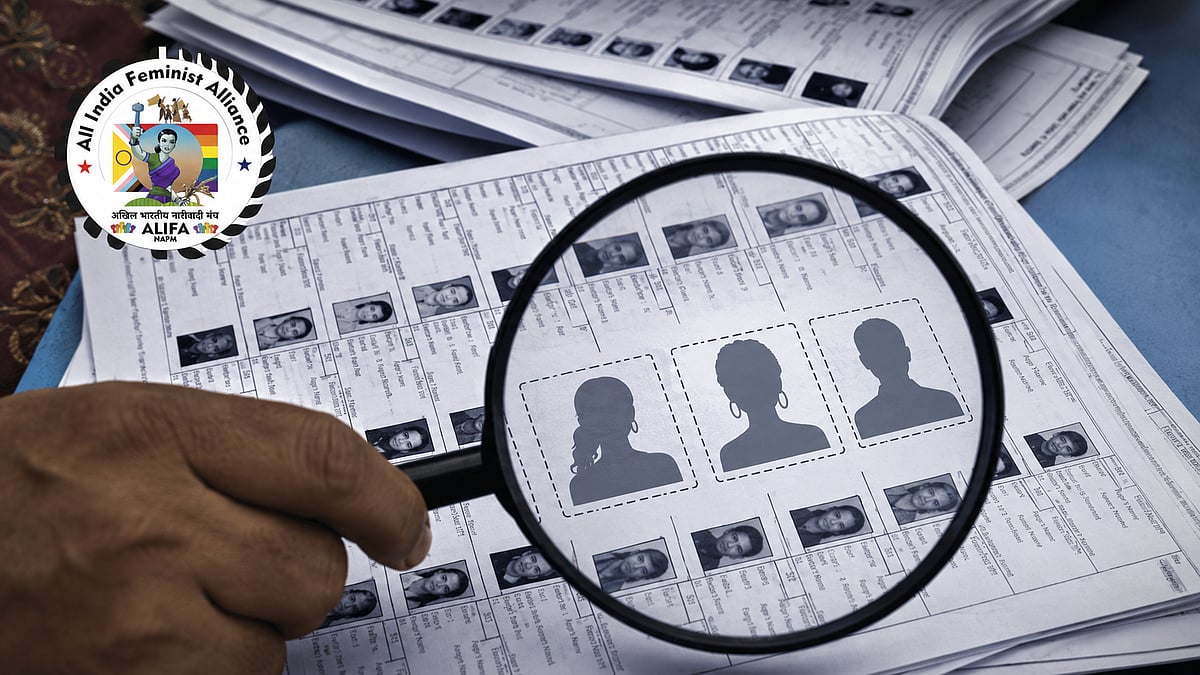
Fifty signatories, including activists, lawyers and researchers, have urged the ECI to fix the Special Intensive Revision’s patriarchal documentation norms, warning that women, transgender persons and minority communities are being disproportionately struck off electoral rolls.
Published on: 9 July 2026, 10:01 am
ON JULY 3, the All-India Feminist Alliance (‘ALIFA’) has written to the Election Commission of India (‘ECI’) raising concerns about the systematic decimation and large-scale erosion of women's voting rights in the context of the Special Intensive Revision (‘SIR’) of electoral rolls, underway since 2025. Fifty signatories, including activists, advocates, law students, researchers and journalists from across the country, have appealed to ECI to ensure that no woman or transgender person is left out of the voter lists on account of systemic problems in the process.
According to the submission, “Women, transgender persons, and members of minority, especially Muslim communities, got deleted in greater percentages than their proportion in the population.” In states such as Bihar, Rajasthan and West Bengal, the group says the revised voter list has led to a substantial drop in the gender ratio recorded in the electoral rolls.
ALIFA, which is an initiative of National Alliance of People’s Movements, has framed its intervention around the “error of exclusion” principle in social policy and has advocated that revision processes must be designed to protect the most vulnerable and marginalized from being wrongly dropped, even at the cost of some administrative inconvenience.
Legal and procedural background
Section 21(3) of the Representation of the People Act, 1950 empowers the ECI to direct a special revision of electoral rolls for any constituency, after recording reasons for doing so. Chief Election Commissioner Gyanesh Kumar announced the nationwide SIR process in October 2025. In the first two phases, SIR covered 13 States and UTs covering nearly 59 crore electors. Post the exercise, there has been a decline of over 5 crore voters. In percentage terms, the electoral rolls have been reduced by over 10 per cent.
According to reports, women have emerged as a significant group excluded from the voter list. In West Bengal, for instance, almost 61.8 percent of voters deleted or placed under adjudication after the SIR are women.
According to a report by Article 14, Amina, a woman in her late 20s, was struck off the voter list because her name was not consistent across her documents. While her birth certificate and school records listed her as Amina Sheikh, her Aadhaar card, PAN card, bank account and Voter ID listed her as Amina Bibi. Amina had married in 2013 at the age of 15 and moved roughly 20 km from her natal home to her marital home. Though she was recorded in her father's household in the 2011 Census, she was not added to the voter list at her marital address until 2019. “Women take their husband's names after marriage. Doesn't the government know this?” she questioned.
Similarly, transgender persons have raised alarms regarding the SIR exercise. In a survey of 74 transgender and intersex individuals conducted across several districts in Karnataka, none of the respondents could identify the polling booth where they had voted in 2002 and a significant share reported being unable to access family records at all, having been disowned, forced to leave their homes, or having had personal documents destroyed after disclosing their gender identity.
According to Joyita Mondal, a trans woman and founder of the community organisation Dinajpur Notun Alo (Dinajpur New Light), at least 50 deletions had occurred within her community in Uttar Dinajpur alone, with many more cases marked under adjudication. She attributed this to one, an inability to travel back to native villages to retrieve documents, and two, mismatches between a person's Aadhaar name and other records following gender transition.
In this backdrop, ALIFA has set out nine broad recommendations for what it calls a “sincere midcourse correction” in Phase 3 of the SIR to reduce the deletions of women and transgender persons, in general and of the marginalised, minority communities and vulnerable groups.