Can welfare schemes be linked to SIR deletions?: Justice K. Chandru speaks to The Leaflet
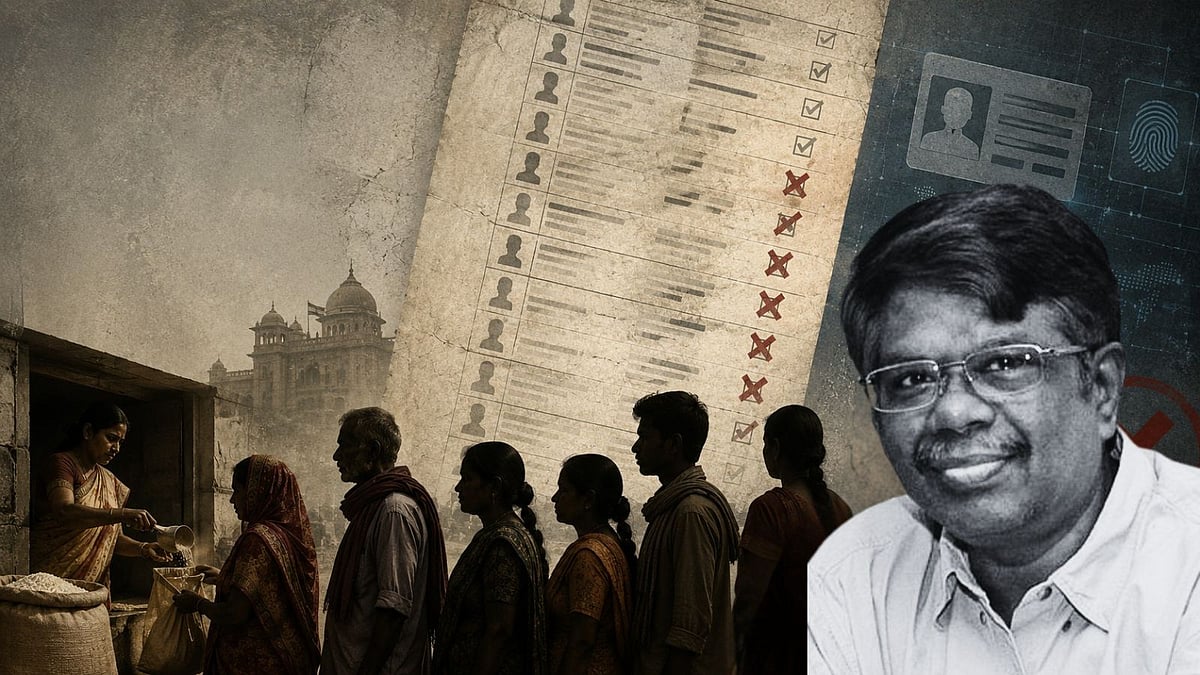
Following mass exclusions from the electoral rolls, the West Bengal government has made SIR inclusion mandatory for access to PDS benefits. Does linking citizenship to welfare and labour benefits have any statutory basis? And how can the judiciary intervene?
Published on: 25 June 2026, 03:07 pm
ON JUNE 23, the Paschim Banga Khet Majoor Samity, before a bench of Justices B.V. Nagarathna and Joymalya Bagchi, argued that linking the Special Intensive Revision (‘SIR’) exercise to food security schemes risked deactivating the ration cards of between 35 lakh to 60 lakh people in the state of West Bengal. The plea challenged the state government orders that linked welfare benefits to exclusions from electoral rolls. The Supreme Court, however, declined the urgent hearing and asked the petitioner to approach the Calcutta High Court instead.
Weeks after the BJP government came to power last month following state elections under the shadow of the SIR exercise that struck off 60 lakh names from electoral rolls in West Bengal, a notification was issued for the Annapurna Yojana scheme, which replaced the former TMC government’s flagship scheme for cash transfer to women. While women would receive Rs 3,000 instead of the earlier Rs 1,500 through direct benefit transfer, the notification stated that those struck off from the rolls in the SIR, would not remain beneficiaries.
On June 4, a state government order made inclusion in the voter list a precondition for access to Public Distribution System (‘PDS’) benefits. According to the official government website, there are more than 8.89 crore PDS beneficiaries in the state of West Bengal.
Both notifications state that beneficiaries who had filed appeals before the SIR Tribunals or submitted applications under the Citizenship Amendment Act would continue to receive financial assistance until their cases were disposed of. However, the linkage of welfare schemes to SIR deletions is inherently constitutionally suspect because the Supreme Court, while deciding the constitutionality of SIR in Bihar, held that removal from the voter list is not a determination of citizenship. On May 27, the Court had directed the Election Commission of India (‘ECI’) to refer deleted persons to the competent authority under the Citizenship Act, 1955, for adjudication.
Since the deleted individuals have not had their citizenship questioned by any competent authority, much less formally determined, the move to render them ineligible for welfare schemes has raised serious constitutional concerns. It also remains unknown how many of the deleted have actually filed appeals, and how many, whether out of ignorance, inability, or the absence of any notice explaining why their names were deleted, did not (The Leaflet reached out to organisations and civil society groups who have collated, or are aware of data pertaining to SIR deletions regarding this, but could not locate any empirical data on the number of appeals filed).
The Leaflet spoke to Justice K. Chandru, former judge of the Madras High Court on the constitutionality of linking the welfare schemes with electoral rolls, and how Parliament through statutes, including the recent labour codes, has been deliberate about when it introduces citizenship as a condition for entitlements, and when it does not.