Collegium recommends to transfer Justice S.A. Dharmadhikari to Kerala High Court, two months after a bench led by Justice Oka censured him for judicial impropriety
While Collegium resolutions denoting transfers are not known to provide detailed reasons, the resolution recommending Justice Dharmadhikari’s transfer noticeably does not even mention that the same is being done for ‘better administration of justice’, a phrase habitually invoked to justify transfer decisions
Published on: 9 April 2025, 01:22 pm
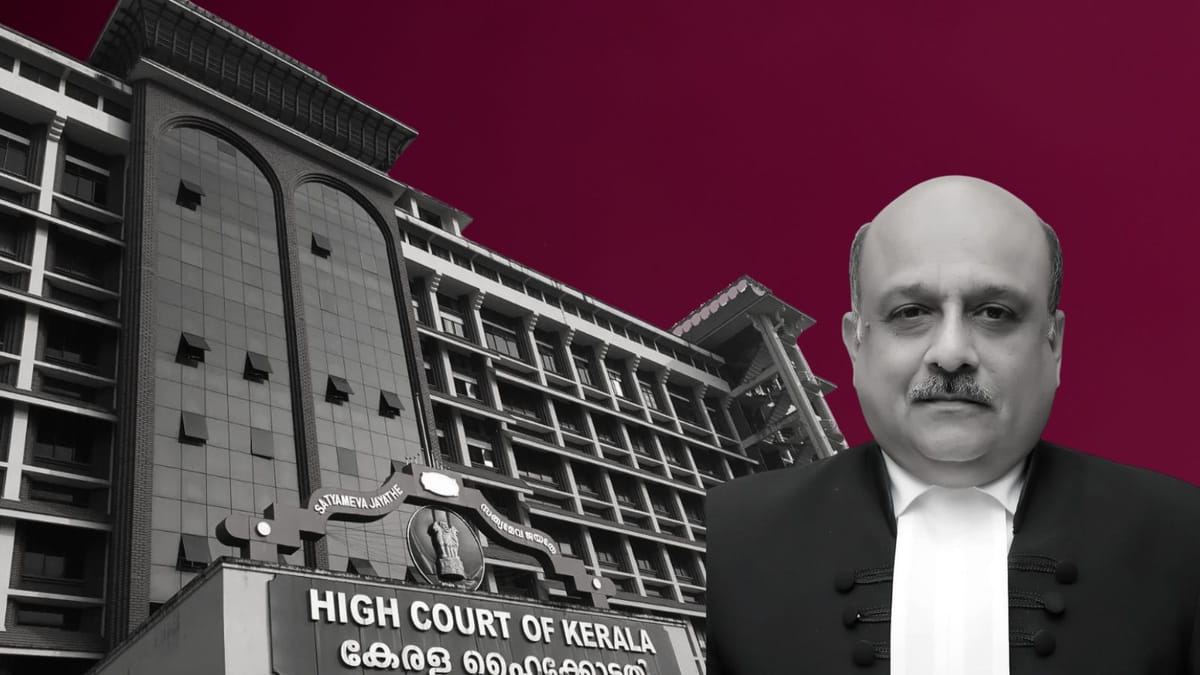
ON APRIL 3, the Supreme Court Collegium headed by Chief Justice Sanjiv Khanna formally passed a resolution to recommend the transfer of Justice Sushrut Arvind Dharmadhikari from the Madhya Pradesh High Court to the Kerala High Court.
The Collegium mulled over the transfer of Justice Dharmadhikari for the first time on March 20, the day when it initiated the transfer of Justice Yashwant Varma shortly after remains of burnt currency were allegedly discovered in the storehouse situated on his official residence.
Justice Dharmadhikari was the third senior judge in the Madhya Pradesh High Court until very recently, when Justice Atul Sreedharan was brought back to his parent high court from the Jammu and Kashmir High Court. Now, Justice Dharmadhikari is fourth in seniority in the Madhya Pradesh High Court.
Justice Dharmadhikari was appointed as judge of the Madhya Pradesh High Court on April 7, 2016, and is due to retire on July 7, 2028. If the Union government accepts the recommendation of the collegium to transfer him to the Kerala High Court, he will be eight in seniority among the judges of the Kerala High Court.
Since the collegium and opacity go hand in hand, we do not know the exact reason behind the transfer of Justice Dharmadhikari. What we do know is that all transfers are presumably made in public interest for the better administration of justice.
It is a different matter that the statement issued by the collegium regarding his transfer does not even mention this customary justification, which is often provided to explain the transfer of a High Court judge.
Since the collegium and opacity go hand in hand, we do not know the exact reason behind the transfer of Justice Dharmadhikari.
As per the Second judge's case (1993), the recommendation by the CJI to transfer a judge cannot be deemed to be punitive and any such transfer is not justiciable on any ground which means that it cannot be challenged in a court of law.
However, it begs the question of what material the collegium had to conclude to transfer Justice Dharmadhikari. It cannot be the case that it was decided without any material in possession forming the basis for the collegium to transfer him out ostensibly for better administration of justice.
We know that Justice Varma was repatriated to his parent High C - theAllahabad High Court, after following a controversy over alleged cash having been found in the premises of his official residence. No matter how much the collegium tried to convince the public that his transfer was independent of the controversy surrounding him, the fact remains that the proposal to transfer him was listed on March 20, 2025, before the Collegium by CJI Khanna.
CJI Khanna was apprised of the alleged cash found at the residence of Justice Varma on March 15 by the chief justice of the Delhi High Court. Thus, there is a clear chain beginning from March 15, leading to Varma's transfer.
In the case of Justice Dharmadhikari’s transfer, we have no probable information which may explain the considerations that might have weighed with the collegium to transfer him to the Kerala High Court where he stands eighth in seniority.
Certain facts need to be put out to draw the chain of events to understand the transfer of Justice Dharmadhikari.