‘The DV Act is a huge law with great significance, and it is under threat’: Hasina Khan on Muslim women, youth, and PWDVA
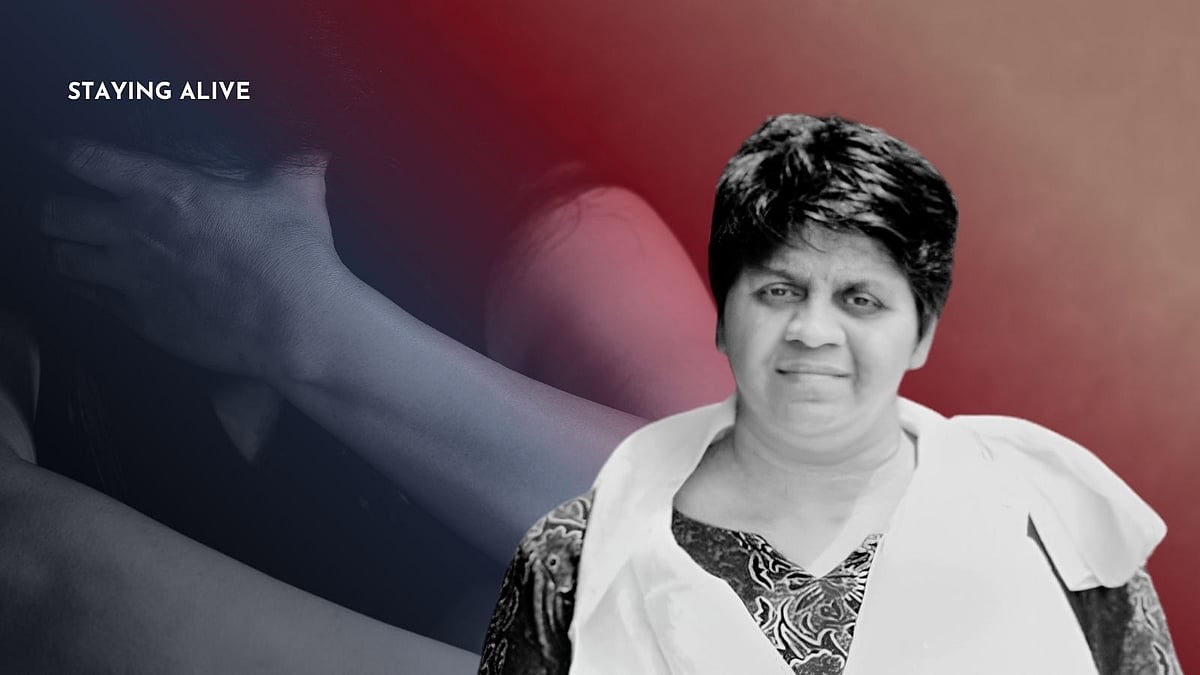
In the May edition of ‘Staying Alive’, Hasina Khan, of the Bebaak Collective, traces how the PWDVA became a crucial tool for Muslim women navigating divorce threats, for young adults facing family control, and why its steady erosion by State neglect and hostile legislation demands urgent attention.
Published on: 30 May 2026, 04:22 pm
LAST OCTOBER, commemorating twenty years of the enactment of the Protection of Women from Domestic Violence Act, 2005 (‘PWDVA’), we kickstarted a special year-long series intended as a ‘living archive’ of the law, one that reflected on not only those who shaped it, but also the implementers. Activists and lawyers who have mechanised, litigated and animated the legislation have seen not only what the PWDVA changed in the legal regime surrounding protection of women, but also who benefitted from it, under what circumstances, and perhaps, most valuably, what aspects of it remained under-explored.
This month, activist Hasina Khan, founder of the Bebaak Collective and member of the Forum Against Oppression of Women, reflects on the strategies through which Muslim women claimed protection under the Act, the role of feminist organisations in making the State accountable, and the contemporary legal and political developments that threaten the emancipatory spirit of the legislation.
In this Act, the concept of domestic space was kept very broad. For the women’s movement, this was a very progressive and feminist step.
Asmita Basu: You have been working on violence against women for decades. What was it like in the earlier days when you started, and what is it like today?
Hasina Khan: When the PWDVA was being formed, its ideas were being shared and discussions were taking place all over India. Ms. Indira Jaising was very active about it. A lot of discussions took place in Bombay and Delhi. I was a part of those discussions.
When we got the idea that we would be putting domestic violence in a broad perspective, it meant that the protections would extend to people living within domestic support structures, including youth, disabled people, older people, women in families, and women in marriage relationships. In this Act, the concept of domestic space was kept very broad. In a domestic setting, most people are those who are under someone’s protection, and they need protection in their respective situations. For the women’s movement, this was a very progressive and feminist step.
Before 2005, a woman facing violence within her own home had very limited legal options in India. If her husband physically abused her, she could invoke Section 498A of the Indian Penal Code, 1860 (‘IPC’) but this provision was confined only to cruelty within marriage, initiated only criminal proceedings, and largely ignored many forms of abuse such as emotional, financial, and verbal. Women in live-in relationships had virtually no protection at all. This was the legal vacuum that the PWDVA was enacted to fill.
The need for a separate domestic violence law was also linked to India’s promises at the international level. The Vienna Declaration (1993) and the Beijing Declaration (1995) both said that domestic violence is a human rights issue and a serious problem for society. The United Nations Committee on Convention on the Elimination of All Forms of Discrimination Against Women (‘CEDAW’) also asked countries to protect women from violence inside the family.
Since India had signed CEDAW, it was expected to change its laws according to these promises. The existing laws, which were mostly criminal laws, were not enough. A stronger and wider civil law was needed to give women quick protection and relief.
The draft was accepted by the Congress government. The State understood the gender perspective, the youth perspective, and the perspective of married and non-married women alike. That intention of the State helped a lot and this law came into effect. The State established a whole structure with instructions, budget, guidelines.
I remember 2005 very clearly. We had campaigned so much. People talked so much about it, that a good law has come for women, that domestic violence is being seen from a broad perspective. I remember that the Khairlanji massacre also happened in 2005. In Maharashtra there was a complete shutdown. And the day it was closed, we had planned a pandal on the road in a Muslim area where we work. We took a mic, made an umbrella, and took the guidelines of the PWDVA. It was very new, but we talked to people on the streets and got a very good response, especially from women.
I remember we used to make big posters, announce, take speakers, talk to people, share information. It was very useful. I mean, meeting with the service provider every time, meeting with the protection officer, if the police did not support the protection officer or service provider, then meeting with the commissioner. See, this is a big role of the State.
Many men challenged us that when women are divorced, how can they stay at home? How can they ask for maintenance? We said no, this act is a secular law for everyone, for Muslims and for women. Our argument was clear. Whether or not there is a divorce, that woman cannot be taken out of the house. Because if there is any kind of violence happening to her, then the one who does the violence will go out, not the one who tolerates the violence.
For Muslim women coming to us, whenever a woman said her husband was going to divorce her or had already divorced her, we would tell her: act as if you have not heard it. Go to the police station and say that you are being threatened with eviction from the house. Say it directly. Don’t talk about divorce. Say that you are being thrown out of the house.
In the police station, the man would be called. He would say, I have given the divorce. We would argue that this is a way to get her out of the house, and this law has been made for exactly this. The police would scold him, and the man would back down. These were the strategies how Muslim women could get protection under the PWDVA. For Muslim women, this Act was very beneficial.
PWDVA has also been very useful for the youth, especially young women in whose houses their choices and rights were being violated. Feminist organisations that were sensitive to this, that believed that parents could also be violent with their children treating them as their property, used this Act very well. Many women’s organisations, however, kept this Act connected only with marriage and not with violence by parents against youth.
Since the last few years there has been no involvement of the State, no meetings, no discussions. Now the Act has been made, so we go to court, we go to the magistrate. And there are a lot of limitations. When will the court’s decision come? What will the decision be? The woman carries this burden. PWDVA, from all the Act and all the Bills, is a more supportive Act. But it has become difficult now.
Many times when a woman goes to the police station wanting to file under the PWDVA, the police don’t even apply it. Many police don’t even know about the PWDVA. This whole gap has increased so much. The police don’t know what the law is regarding gender rights and women’s rights. There is no training, no meetings with administration, no meetings with civil society. A place like the Ministry where we used to go every year, every month. Now, we have gone once or twice in five years.
In Tata Institute of Social Sciences, there used to be thousands of meetings on domestic violence. Now there are no meetings, no discussions. A silence has come in this era even from the State’s side. Cases that should be decided within ninety days, those ninety days are gone. A hundred and twenty days, two hundred days – those timelines are not being followed anymore.