Is ‘Abolition’ the answer to the PIL problem?
Fifty years since its introduction, Public Interest Litigation faces an existential challenge as the central government insists on its misuse, pushing for its abolition in the Supreme Court. Speaking to The Leaflet, lawyers and experts share thoughts on the future of the PIL and the problems of an ‘abolition’ demand.
Published on: 16 June 2026, 11:59 am
ON APRIL 8, 2026, while arguing before the nine-judge Bench in the Sabrimala reference, Solicitor General Tushar Mehta urged the Supreme Court to remove Public Interest Litigation (‘PIL’) as a concept altogether. Questioning the relevance of such petitions, he asked, “In this day and age, why should such PILs be entertained?” According to the Centre, many PILs now being filed were motivated and at the behest of undisclosed interests.
Chief Justice of India Surya Kant responded saying that the courts were cautious. That same day, Justice B.V. Nagarathna observed that the petition challenging the temple entry practice should not have been fit to be entertained in the first place as no genuine devotee, according to her, would have challenged such a practice.
“Public Interest Litigation has now become Private Interest Litigation, Publicity Interest Litigation, Paisa Interest Litigation and Political Interest Litigation,” Justice Nagarathna observed on May 5, adding that, “all are called PILs, but we entertain only real and genuine PILs”
There was a certain difference in the tenor between the statements made by the judges and the position advanced by the Solicitor General. While the judges acknowledged that only genuine and bona fide PILs must be encouraged, the Solicitor General, on the other hand, called for their complete abrogation. This is not the first time the Centre has questioned the utility of PILs. Back in 2020 too, Mehta had told the Court that “professional PIL shops” must be locked down.
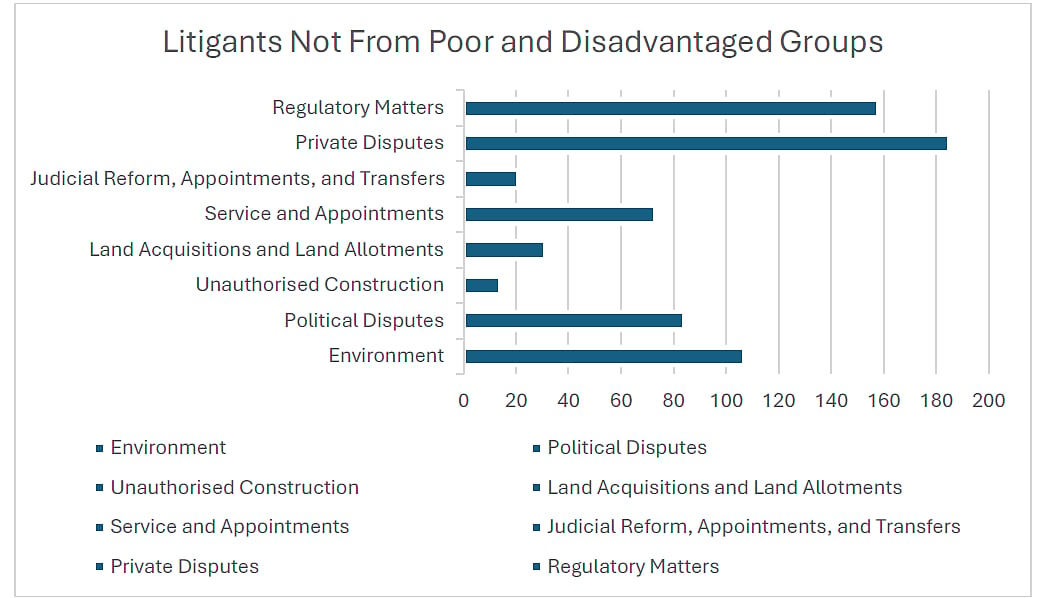
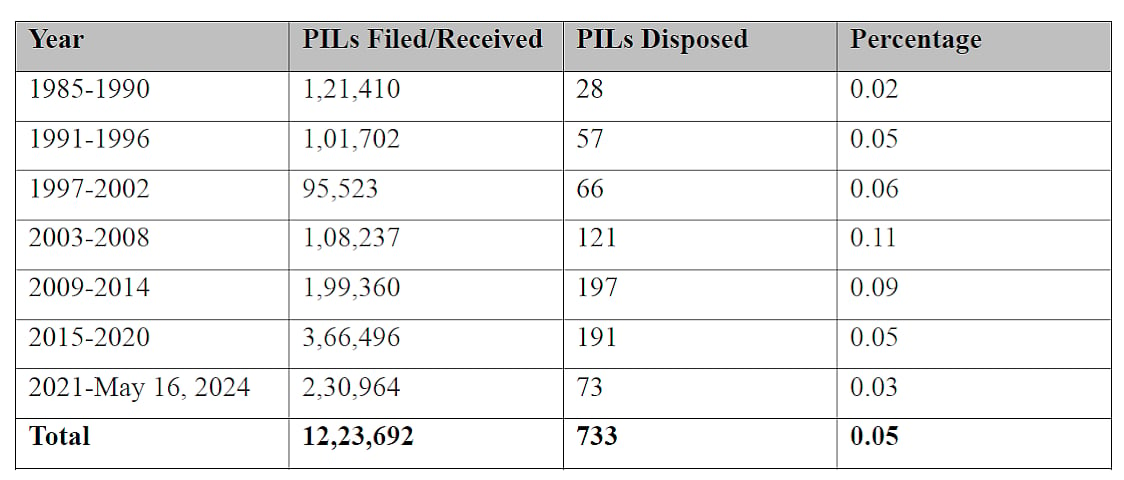
Almost fifty years after PILs were introduced, this exchange opened up some urgent questions.Should the relaxed locus standi principles, that gave PILs their democratic character, be wound back to their original form? Is the misuse of PILs really as widespread as it is made out to be? If yes, what does misuse actually consist of? Political weaponisation, judicial overreach, frivolous petitions, or something else entirely? Finally, is the answer abolition, or is there a more calibrated case for reform?
A brief history of PILs and the conundrums of locus standi
Public Interest Litigation emerged in the late 1970s in the aftermath of the Emergency, marking a significant departure from traditional adjudication. Many citizens in India lacked the access to courts with widespread poverty and illiteracy, which prompted the Supreme Court to relax the rules of locus standi and simplify procedural requirements for filing petitions.