Even Ganapati cannot fix the breach of people’s trust in the judiciary
The Constitution envisions the judiciary as a check on executive power, and any perceived closeness between these two branches could undermine that role, writes Anand Teltumbde.
Published on: 14 October 2024, 05:33 am
The Constitution envisions the judiciary as a check on executive power, and any perceived closeness between these two branches could undermine that role, writes Anand Teltumbde.
—
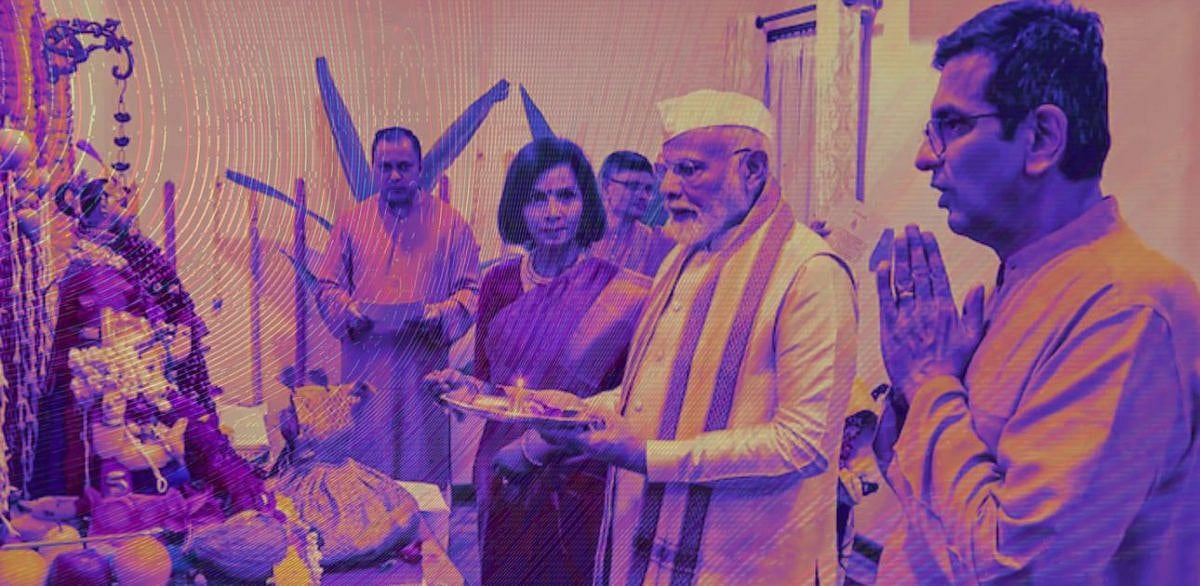
WHAT is wrong with Narendra Damodardas Modi performing Ganapati Puja at the house of Dhananjay Yashwant Chandrachud? Can they not meet socially? As devout Hindus, they are culturally permitted to invite each other on festive occasions.
Why, then, is there a fuss over the video of them performing the aarti of Ganapati? Why have some senior legal luminaries publicly condemned it? Surely, no law has been violated in this Ganapati Puja. Nor has any religious code of Hinduism been breached. There is truly no issue if some Chandrachud meets some Modi or vice versa to worship their God.
The problem arises because these gentlemen are not ordinary individuals. They both head crucial branches of power, forming two of the three vital legs (judiciary and executive) that uphold the constitutional State.
The outrage stems from the perceived breach of the basic principle of judicial independence. It is believed that the Indian Constitution advocates the separation of powers, and such bonhomie between the Chief Justice of India (CJI) and the Prime Minister undermines these principles.
Far more important is the people's trust that tenuously rests on the perceived independence of the judiciary from the executive. If this trust is breached, the entire edifice of the democratic State might collapse.
“Why, then, is there a fuss over the video of them performing the aarti of Ganapati? Why have some senior legal luminaries publicly condemned it?
Much of the outrage comes from the legal fraternity, overtly focused on the independence of the judiciary. It has missed out another constitutional principle— secularism.