The Election Commission Dissent Is Our King Lear Moment
Two Election Commissioners recorded at least fourteen written objections to decisions issued in the Commission's name, and no one outside Nirvachan Sadan knew until a newspaper reported it.
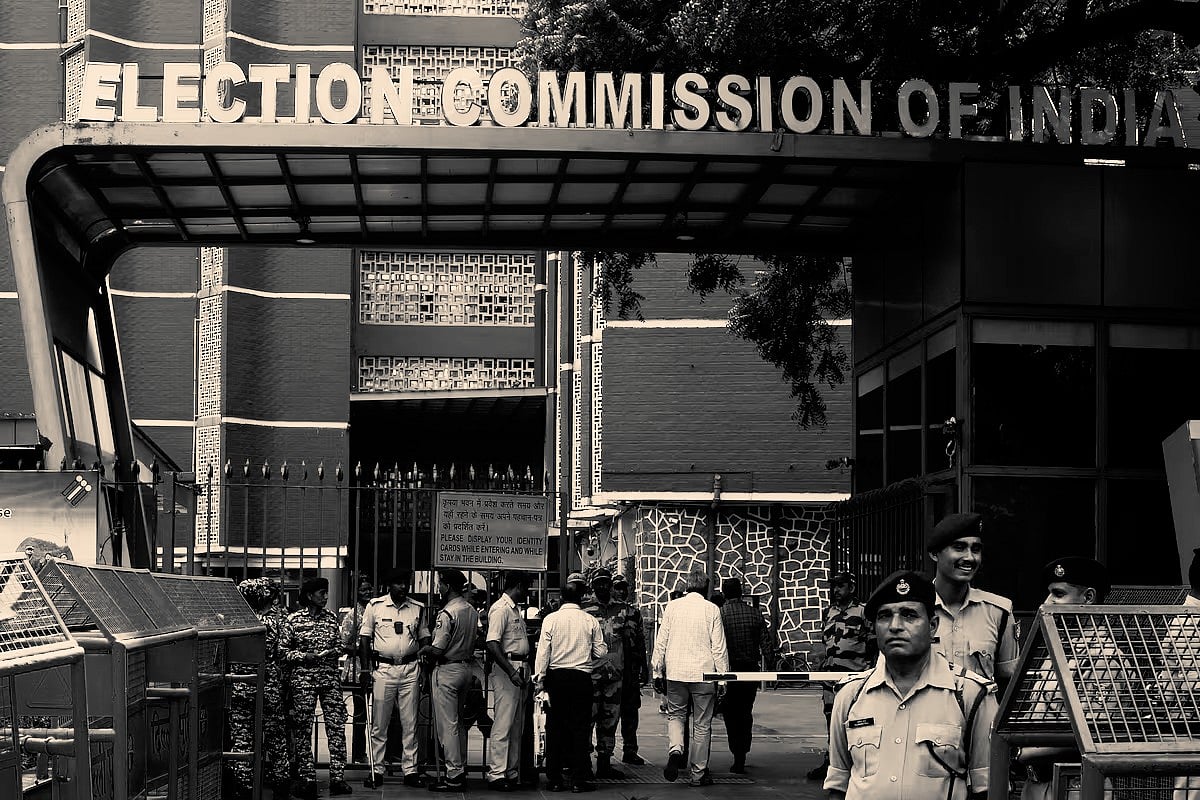
Published on: 27 September 2026, 12:00 pm
IN KING LEAR, an old king, tired of governing, divides his kingdom among his daughters and holds one thing back: “Only we shall retain / The name, and all th’ addition to a king”. The rule, the revenue and the business of running the realm go to others. He will keep the title and the ceremony, and he will no longer have to watch. The tragedy does not begin with the storm or with his daughters’ cruelty. It begins there, with a sovereign’s decision to stop looking.
Only one man, Earl of Kent, at court sees where this leads. He tells the king to his face that he is making a mistake: “Be Kent unmannerly / When Lear is mad”. When Lear orders him out of his sight, Kent answers with the three words the play rests on- “See better, Lear”. He is banished for it, and leaves saying, “Freedom lives hence, and banishment is here”.
In a republic, the sovereign is not a king. The Constitution names the sovereign in its first words, ‘We, the People of India’. We keep the name, and all the additions. The work of keeping the electoral roll, the list that decides which of us gets to be sovereign at all, we entrusted to the Election Commission. That was right; a sovereign must delegate. The danger begins, as it did for Lear, when the sovereign decides that having delegated, it need no longer look.
On 23 September, The Indian Express published what I can only describe as Kent’s speech. Ritika Chopra’s investigation reports that two of the Election Commission’s three members, Sukhbir Singh Sandhu and Vivek Joshi, objected in writing at least fourteen times in ten months to decisions taken in the Commission’s name. Since the report, the Commission has responded that such observations are part of ordinary institutional deliberation and that its final decisions over the past year, including on the SIR, were ‘unanimous’.
Were the objections really just notings files or were those addressed to somebody? I would argue that the objections are addressed to us, the sovereign. What they are saying, fourteen times over, is: see better.
Whose Commission is it?
Article 324 of the Constitution places the superintendence, direction and control of the electoral rolls in ‘the Election Commission’, not in its chairman. When the Narasimha Rao government had had enough of T.N. Seshan, they made the Commission a three-member body in 1993. Seshan argued that the new commissioners could advise him but not outvote him. In 1995 a Constitution Bench disagreed, upholding the majority rule as a guard against concentrating power over elections in one person. Section 18 of the 2023 Act keeps that rule, which is unanimity where possible, and the majority where members differ.
Put simply, the Chief Election Commissioner is first among equals and nothing more. He presides over the Commission, but he does not own it. He has no veto and no casting vote, and he has no authority to speak in the Commission’s name when the Commission has not spoken. When two of its three members say a decision was never theirs, the law does not treat it as the Commission’s decision, whatever letterhead it was issued on.
What did the two commissioners tell us?
The first objection concerns the Commission’s own voice. On 16 April, Sandhu reportedly told senior officers that many communications were going out in the Commission’s name without its approval, which he said was not permitted.
The second is Form 6, the application a citizen files to be entered on the roll. It is prescribed by Rules the Central Government makes under the Representation of the People Act, 1950 and while the Commission is consulted on the matter, it cannot itself amend the statutory form. The Supreme Court has separately recognized that the Commission retains a degree of residual authority to formulate an appropriate documentation framework for SIR. Yet an additional declaration which appeared in the online Form 6 workflow asking first-time applicants whether they, a parent or a grandparent appeared in the roll of the last intensive revision, some two decades ago can be seen as an amendment to Rules which the Commission (let along one of the members of it) did not have the power to. Joshi warned in May that this required amending the Rules, but it was done anyway. On 13 August, Sandhu recorded that it was “unauthorised and illegal”.