What ‘time’ is the right ‘time’ for the George Floyd protests?
Published on: 2 June 2020, 02:56 pm
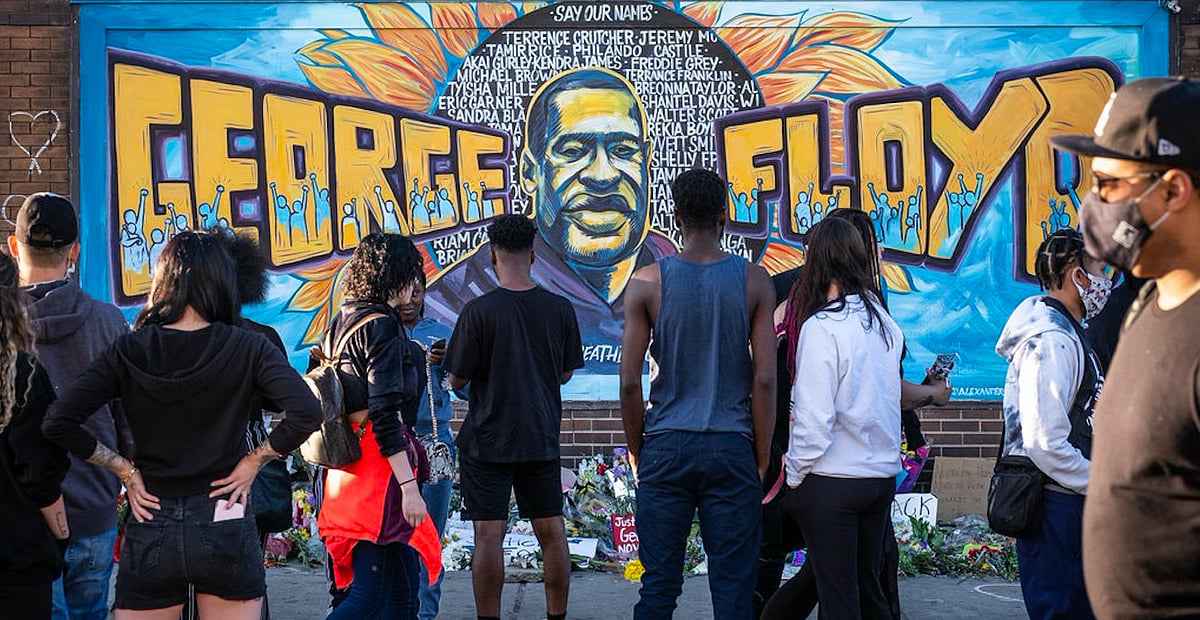
THE George Floyd protests probably don't need any more weighing in. Death is quite personal, personal to one's family and friends often mourned in solitude. However, this death is anything but personal or perhaps personal to the entire community of coloured folks. It is difficult to imagine what the family must be going through in mourning a bereavement that is displayed across national and international media.
Every time an incident such as this occurs, whether across the mighty oceans or closer to home in India, the most important question that pops up is, "When is a good time to protest". Is it not better to maintain peace and order? Is it not better to 'talk' and not 'take' to the streets?
The book of Ecclesiastes in the Bible, Chapter 3 proclaims that there is a time for everything, and a season for every activity under the heavens:
a time to be born and a time to die,
a time to plant and a time to uproot,
a time to kill and a time to heal,
a time to tear down and a time to build,
a time to weep and a time to laugh,
a time to mourn and a time to dance,
a time to scatter stones and a time to gather them,
a time to embrace and a time to refrain from embracing,
a time to search and a time to give up,
a time to keep and a time to throw away,
a time to tear and a time to mend,
a time to be silent and a time to speak,
a time to love and a time to hate,
a time for war and a time for peace.
While I feel completely inadequate in answering the question of timing, I take a few cues from an old letter written by an old prophet, Dr Martin Luther King Jr. When African-American community was given the 'manna' of Brown v Board of Education decision desegregating public schools by the Supreme Court of the United States, the decision acted like a catalyst for other civil rights issues culminating into the Birmingham demonstrations in 1963 and the subsequent arrest of its leadership including Dr. King.
Dr King was accused of fomenting 'disorder' and 'chaos' in the city by the white clergy. They claimed that though they were sensitive towards the cause but "the protests were unwise and untimely". There are better ways and means to put across your point, they said. The "liberal" sweetheart President Kennedy also turned out to be a fence sitter; so much so that he avoided being seen with the civil rights lobby members in faraway Washington. Though the leadership of the protests was generally averse to the idea of answering all criticisms for running the risk of being misrepresented, Dr King thought that time was opportune for engaging with the same southern clergies who had issued the statement against him and the protests. He chose letters as his medium, thus writing one of the most brilliant documents of world history, "The Letter from Birmingham Jail".