Are anti-conversion laws antithetical to the Constitution of India?
In recent years, a slew of anti-conversion laws have been passed in many states. They blur the line between forced conversions and the right to choose one’s religion, argues Raushan Tara Jaswal in this piece.
Published on: 16 August 2023, 05:02 am
In recent years, a slew of anti-conversion laws have been passed in many states. They blur the line between forced conversions and the right to choose one's religion, argues Raushan Tara Jaswal in this piece.
—
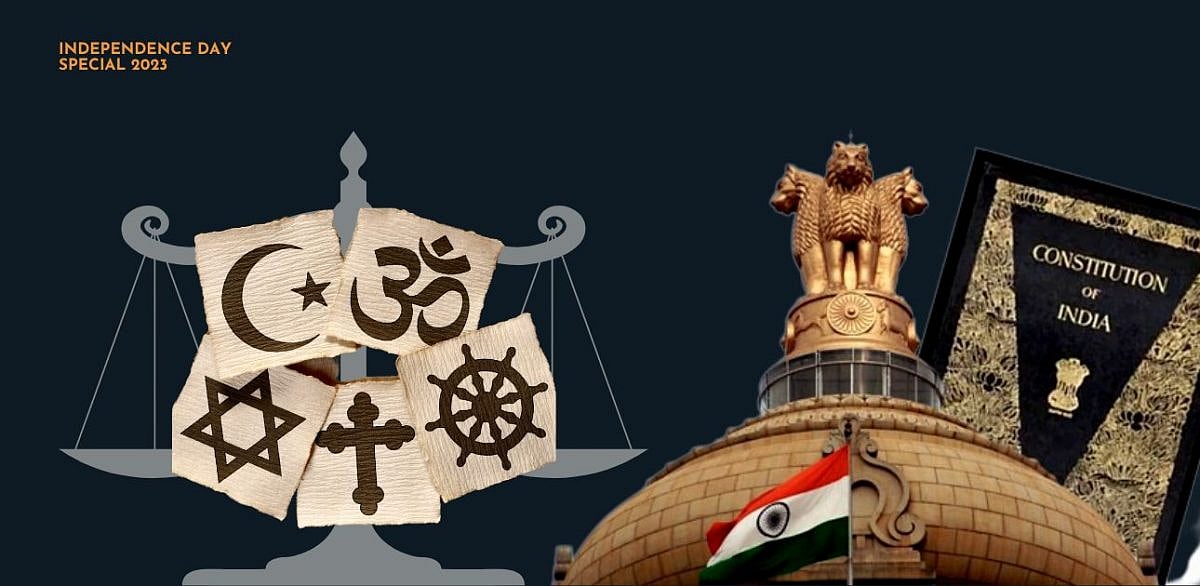
THERE is no denying that India is a 'secular' state; it is the very fabric of the nation enshrined in the Preamble and within a series of fundamental rights from Articles 25–28 of the Indian Constitution.
These rights enable us to practise a unique form of secularism that not only separates the Church from the State but actively advocates for the protection, preservation and promotion of religion without excessive government intervention.
The Constitution aims to advance religious freedoms of 'conscience', 'practice', 'profession' and 'propagation'. Limitations on these freedoms, if any, must be tested on the touchstones of public order, morality and health.
However, in recent years, the attacks on these freedoms have intensified through State interventions of regulating inter-religious marriages, dietary preferences, and religious conversions.
There have been multiple incidents of communal clashes in Haryana, Maharashtra, Manipur and Uttar Pradesh and other states, which some scholars argue are not only enabled by the ruling regime's impunity, but also furthered by discriminatory policies.