Tareekh pe tareekh: A jibe leaning towards reality
Published on: 12 November 2023, 01:01 pm
What are the factors that lead to delay in delivery of justice and can they be dealt with?
—
"I don't want this court to be a 'tareekh-pe-tareekh' court," was the honourable Chief Justice of India Dr D.Y. Chandrachud's statement prior to the day's proceedings on Friday, November 3.
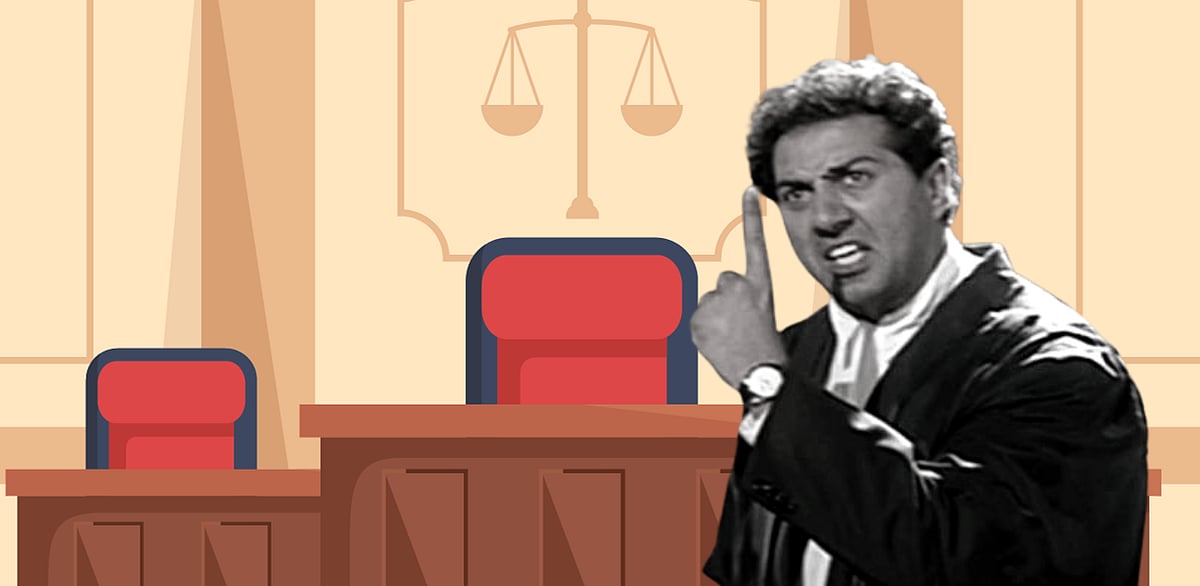
Though in the film Damini, Sunny Deol addressed the judge, pointing out how the judicial system was delaying a crucial case, this time the CJI used this iconic dialogue while pointing out how advocates seek adjournments in freshly filed matters, causing delay in the proceedings.
He further said that between September 1 and November 3 this year, the Supreme Court had received 3,688 petitions for adjournment from lawyers as soon as the cases were scheduled for hearing.
This is a very serious problem that none of us can shy away from. The Indian judiciary has garnered infamy for being inefficient, where we see headlines like how a 90-year-old was convicted for a crime that happened 42 years ago.
This is a more complex problem than a blame game between advocates and judges. After all, we must understand that the one who suffers is the litigant.
So let us delve into this problem in detail.
Justice delayed: When time stands still in court
In the brief experience I have had in courts, I have ended each and every application with this simple line: justice delayed is justice denied. But the picture painted by some facts does not correlate with the most cliché analogy about the state of justice.