The Renaissance Man of Law: A review of Professor Amita Dhanda’s biography of Justice M.N. Rao
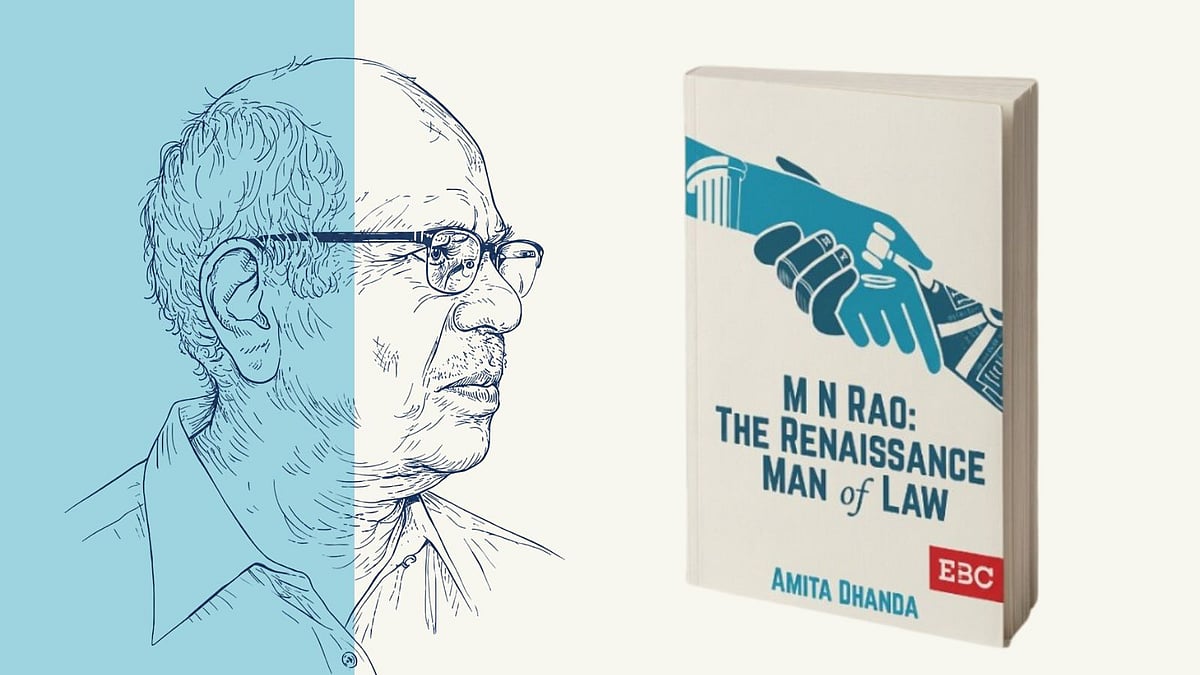
Professor Amita Dhanda’s biography of Justice M.N. Rao traces his many careers and the judicial spine that held them together.
Published on: 27 June 2026, 08:03 am
AT A CONVERSATION organised by The Leaflet in December 2024, Justice Gautam Patel asked Professor Upendra Baxi what three things a citizen wants from a judge in the Indian judiciary. Baxi’s answer was simple, “Spine, Spine, Spine!” It is this quality that Professor Amita Dhanda sets out to trace in her biography of Justice M.N. Rao, a man who over the course of his career assumed the varied roles of a Judge, Law Secretary, Senior Advocate, and the Chairperson of the Backward Class Commission.
Although Justice Rao published his memoir, ‘Glimpses from the Recital of My Life,’ in 2021, the present book is less interested in reminiscence than in reckoning. Organised into seven chapters, it follows the major phases of his career in roughly chronological sequence, showing how each role informed the next and together shaped what she calls the “Renaissance Man of Law.”
The Law Secretary
As the Law Secretary to undivided Andhra Pradesh between 1979 and 1983, Justice Rao worked with five Chief Ministers. Professor Dhanda highlights the demands of the role, which included drafting legislation, shaping litigation policy, and articulating legal understanding with clarity.
Professor Dhanda portrays Justice Rao as a judge who resisted both excessive deference to the State and reflexive distrust of it.
One striking example involves the rampant misuse of ordinances. During Chief Minister Anjaiah’s tenure, a notification for Panchayat Raj Elections was issued that included reservations for Scheduled Castes and Scheduled Tribes, but the statutory period permitting such reservations had long expired. A petition had already been filed in the High Court challenging the notification, leaving the government in a no-win situation. It was Justice M.N. Rao who effectively stepped in and advised the promulgation of an ordinance with retrospective effect increasing the period of reservation by ten years.
The Judge
Justice Rao’s judicial career is presented as a progression from a District Judge, to Chairman of the Sales Tax Appellate Tribunal, to Judge of the Andhra Pradesh High Court, and finally Chief Justice of the Himachal Pradesh High Court.
Professor Dhanda foregrounds the distinctive role of trial courts as primary finders of fact, where judges have the advantage of directly observing the parties and witnesses. One particularly unusual case from Justice Rao’s tenure as District Judge involved an intoxicated man who had raped his daughter and was later found burnt to death, allegedly by his own wife. Justice Rao took the uncharted course of acquitting the wife as there was no direct evidence against her, and ruled that the man had died by suicide since, while on fire, he was heard screaming that he was “reaping the wages of the sin he had committed,” alluding to the responsibility he took for what happened to him. This decision was later upheld by both the High Court and the Supreme Court. It reflects the book’s broader argument that Justice Rao often looked beyond mechanical legal formalism in pursuit of substantive justice.
Justice M.N. Rao also served as a Judge at the Andhra Pradesh High Court for more than a decade, delivering more than 200 judgments on issues including equality of opportunity and personal liberty. Professor Dhanda portrays him as a judge who resisted both excessive deference to the State and reflexive distrust of it. His subsequent elevation as Chief Justice of the Himachal Pradesh High Court receives comparatively less attention in the book, although Professor Dhanda uses that phase to demonstrate how Justice Rao balanced judicial independence with the institutional responsibilities of court administration.