The Illusion of Deadlock: Corporate Constitutionalism, Affirmative Vetoes and the Battle for Tata Sons
In 2021, Tata Sons pleaded that the Trusts’ affirmative vetoes were vital shields against rogue boards; in 2026, it used an executive casting vote to sweep them aside.
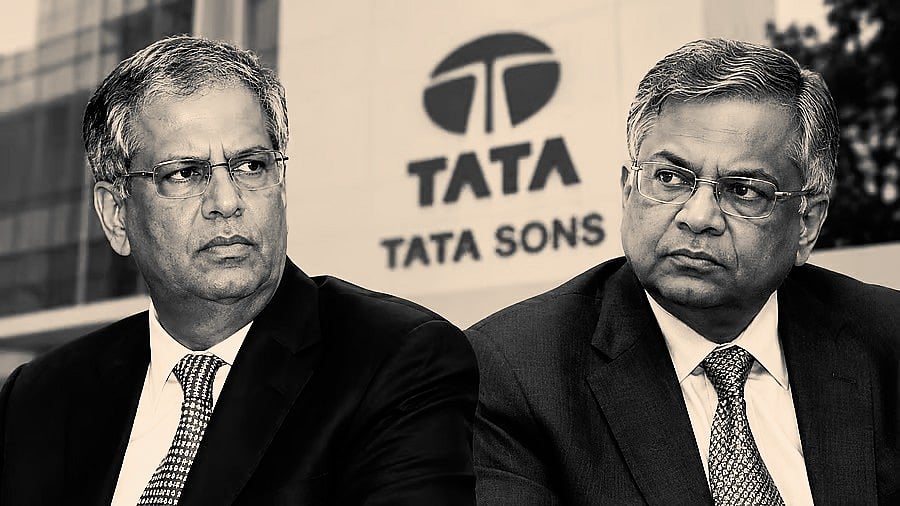
Published on: 21 September 2026, 03:45 pm
SPEAKING FROM LONDON on September 18, 2026, former Solicitor General of India Harish Salve dismissed the growing rebellion within Bombay House, headquarters of the Tata Group, and advised Tata Sons and its Executive Chairman, Natarajan Chandrasekaran, that no corporate enterprise controlling assets of two lakh crore rupees could permit itself to be hamstrung by the private squabbles of trustees. He critically remarked on the philanthropic endowments owning sixty-six per cent of the conglomerate, and underlined the point that Tatas represent the face of India as an acclaimed global institution running sensitive national assets from aviation to defence and green hydrogen. He then sharply asked, “How can such an institution be run by three trustees insisting that it must go by their culture? What culture, he asked, are we talking about?”
By casting the dispute as an antiquated collision between modern managerial meritocracy and an archaic, feudal trusteeship, Salve sought to reframe a strict legal question as an ideological debate over corporate ethos. In this telling, the executive board of Tata Sons represents the forward-looking custodians of public value, economic modernisation, and regulatory compliance, while the Chairman of the Tata Trusts, Noel Tata, represents an obstinate, backward-looking past.
The law, however, does not adjudicate corporate authority through the lens of atmospheric nostalgia or executive self-importance. Under the Indian Companies Act, 2013, corporate management is not an ethereal moral vocation; it is an exercise of strictly delegated powers circumscribed by statutory commands and contractual covenants. The fundamental legal question currently roiling Tata Sons Private Limited is not whether corporate India prefers Chandrasekaran’s operational competence over Noel Tata’s stewardship of philanthropic capital. The question is far more austere: what does the corporate constitution of Tata Sons actually prescribe, and can an executive board, in the name of managerial expediency, unilaterally dismantle the affirmative voting covenants that govern its own existence?
The question is far more austere: what does the corporate constitution of Tata Sons actually prescribe, and can an executive board, in the name of managerial expediency, unilaterally dismantle the affirmative voting covenants that govern its own existence?
Strip away the corporate theatre, and the controversy resolves itself into a classic battle over corporate constitutionalism. A company is not an absolute executive republic governed by managerial fiat, nor is it an unfettered democracy where raw majoritarianism reigns supreme. Where shareholders negotiate specific, entrenched restrictions upon the authority of their directors and embed those terms in the Articles of Association, those provisions constitute the foundational charter of the enterprise. To ignore them under the pretext of preventing deadlock is to substitute the rule of corporate contract with an arbitrary executive doctrine of necessity.
Codified Governance versus Board Expediency: Anatomy of a Non-Tie
The legal dispute erupted into the public domain on September 17, 2026, when the Board of Directors of Tata Sons convened in Mumbai. On the agenda was a proposal to reappoint Chandrasekaran as Executive Chairman for a third consecutive five-year term, effective from February 21, 2027. Because his own remuneration and continuing executive tenure were directly at stake, Chandrasekaran complied with Section 184 of the Companies Act, 2013, which disqualifies an interested director from participating in deliberations, and vacated the chair. Independent director Harish Manwani, who also chairs the company’s Nomination and Remuneration Committee, was installed as interim presiding officer.
The boardroom composition reflected the dual governance architecture introduced into the Articles of Association between 2012 and 2014. Under Article 104B, the two principal registered endowments, the Sir Dorabji Tata Trust and the Sir Ratan Tata Trust, possessing an equity stake exceeding forty per cent, hold the permanent entitlement to jointly nominate one-third of the total number of directors. On the six-member board sitting on September 17, 2026, two directors held office pursuant to this power: Venu Srinivasan, the longest-serving member of the board, and Noel Tata, who assumed the chairmanship of the Tata Trusts in October 2024 following the passing of his half-brother, Ratan Tata. The remaining non-interested members comprised Saurabh Agrawal, the Group Chief Financial Officer, and Anita Marangoly George, an independent director.
When the resolution for Chandrasekaran’s reappointment was put to a vote, the division was immediate. Venu Srinivasan, aligning with executive management, voted in favour. Noel Tata voted against, formally registering his dissent and handing to the board an exhaustive legal opinion authored by the former Chief Justice of India, D.Y. Chandrachud. Saurabh Agrawal and Anita George voted in favour. At this juncture, the non-conflicted board members stood three in favour and one against, while the Trust nominee directors stood divided one to one. Claiming that this division represented a boardroom deadlock, Manwani purported to exercise a casting vote under Article 121, broke the supposed tie, and declared the reappointment resolution duly approved by a four to one majority.
The contention that this vote represented a lawful resolution of a tie is corporate fiction. In an incisive scholarly critique of this imbroglio on the IndiaCorpLaw platform, Professor Umakanth Varottil of the National University of Singapore dismantled the core fallacies underlying the board’s voting procedure. As Varottil demonstrated, the board conflated two structurally distinct voting concepts: an equality of votes across a collegiate decision-making body, and the failure of an express condition precedent within a designated sub-class of directors.