Resisting the backlash: How conservative arguments on marital rape threaten feminist progress
A systematic, critical reading of the Union’s submissions in the Supreme Court’s pending case on the constitutionality of the marital rape exemption is also an exercise of resistance. By re-orienting the conversation of rape trials around gender-based violence, we could respond most effectively to the backlash against feminist struggles in our courts, and outside them.
Published on: 8 March 2025, 11:09 am
A shift to the far right, democratic decay, and a crisis of constitutional beliefs have created a near perfect storm for backlash against rights of minorities, whether they be marginalised along caste, class, gender or sexuality. For long, the language of the law has been that of men. For example, the standard of reasonableness is that of the man on a Clapham omnibus. In that way, as Catharine MacKinon reminds us, the testifying of a witness is so brutal that it resembles ‘re-raping’ the victim. Much has already been written about the backlash in courts, against rights of transgender persons and women, and much more will be written on.
Something to focus on is documenting how this backlash comes out in courts, in pleadings, and in oral arguments.
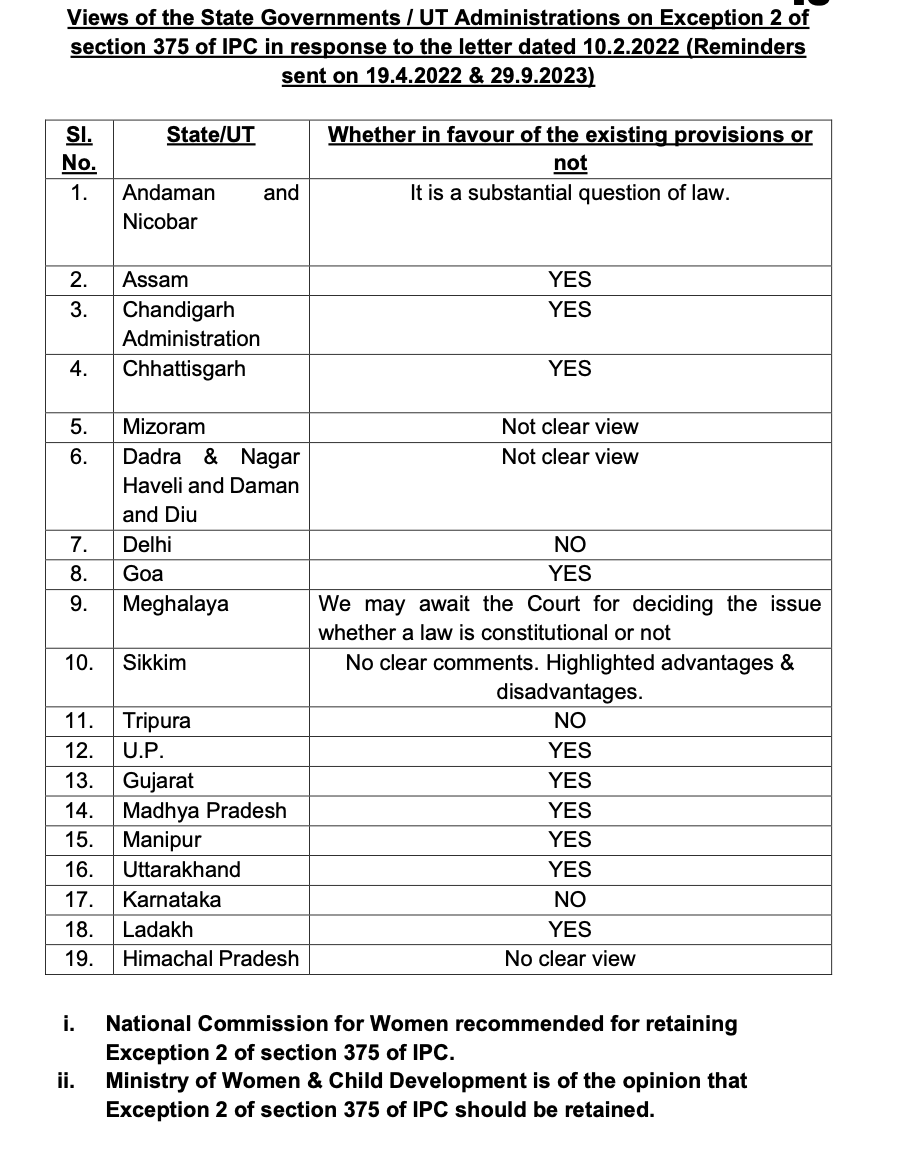
There are two rounds of arguments which warrant discussion, the first, the argument of the Union of India filed through an affidavit dated October 3, 2024 in the Supreme Court, and second, the argument of the Men’s Rights groups, in RIT Foundation case before the Delhi High Court, and reiterated before the Supreme Court. The arguments, in both cases, share similar intensities of enthusiasm, and are identical in content. Yet, on closer inspection, they are simply bluster, incapable of standing even the most perfunctory of legal scrutiny.
For long, the language of the law has been that of men.
But I wish to draw a distinction between the two, because the stance which is adopted by the Union is impermissible because of the obligations in Article 15(1) and Article 15(3). A circumlocution of these two provisions is not merely an obfuscation but completely constitutionally impermissible. On the other hand are the arguments of men’s rights groups, who have used this litigation as a reason to fuel anxieties and moral panic. I will limit my analysis in this piece to merely the legal arguments advanced by the Union in Hrishikesh Sahoo because the arguments of the men’s rights groups warrant a larger conversation around dog whistling against the rights of women through Instagram reels, a supposed boycott of marriage and twitter storms with #MarriageStrike and their own anthropological and sociological analysis. One must draw attention to the fact that in both, then old and the new penal laws, the marital rape exception has remained intact, and thus, while the same may not be a legislative backlash, per se, it represents a stasis in terms of where the needle remains on the progress of the Indian women’s movement.