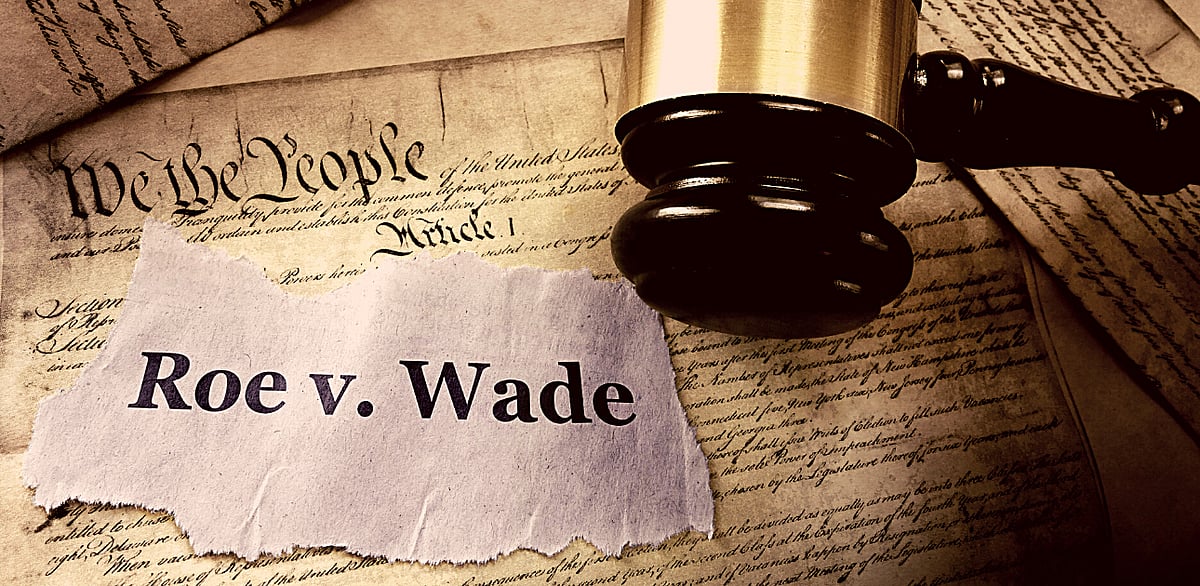
Roe versus Wade fifty years on: What does its fall teach us about the fragility of democratic institutions?
A politicised and polarised Supreme Court does not bode well for democracy. Polarisation of the Supreme Court is detrimental to its legitimacy.
Published on: 22 January 2023, 06:39 am
A politicised and polarised Supreme Court does not bode well for democracy. Polarisation of the Supreme Court is detrimental to its legitimacy.
—-
FEW judgements pronounced by a Constitutional Court anywhere in the world have attained the prominence that Roe versus Wade (1973) has gained. It was a feminist institution in itself — a decision by the United States Supreme Court which established certain fundamental rights by reading privacy into the Fourteenth Amendment to the United States' Constitution.
The judgment led to the recognition of a gamut of rights, and established critical protections against violations of rights to bodily autonomy, health and equality. But Roe was so much more than a mere judgment of a court. It was a beacon of hope for feminist movements across the world and a pathbreaker in its own right.
Despite repeated assaults on Roe since the day it was pronounced, it seemed insurmountable. Surely, no court would go so far as to strike at the core issues of private decision-making and liberty, it was thought. Alas, that was not to be. On June 24 last year, the U.S. Supreme Court in Dobbs versus Jackson Women's Health Organisation overturned Roe, and since then it seems as if the floodgates of attacks on a wide range of rights have been opened in the United States.