Nijjar killing: Accusations and their implications under international law
As accusations and counter-accusations abound, how will the allegation that the Indian government had a hand in the killing of Khalistani activist Hardeep Singh Nijjar play out in the arena of international law?
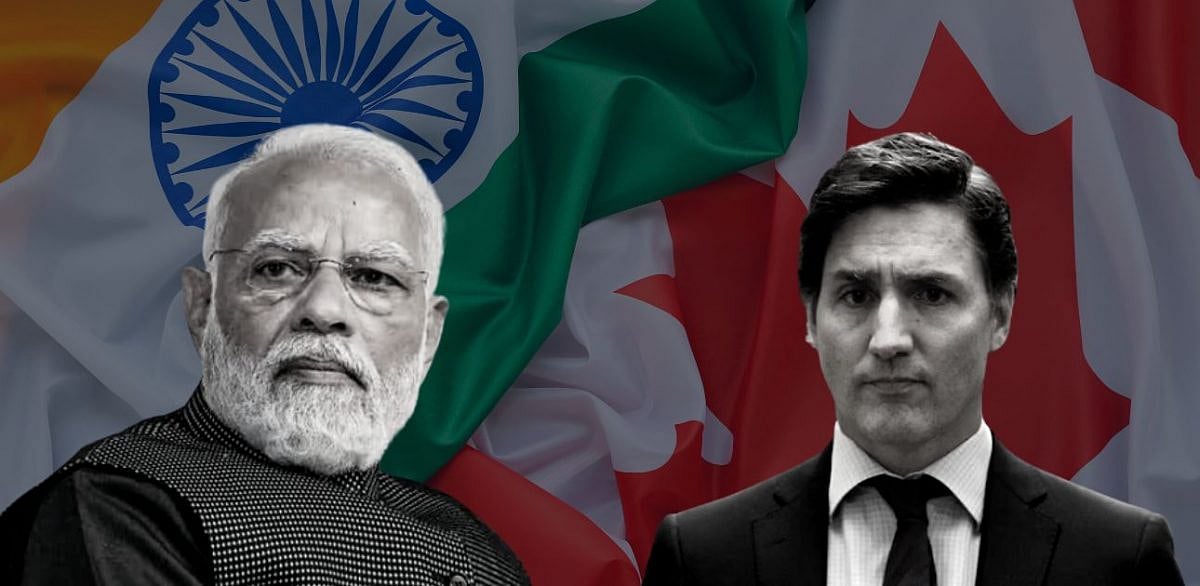
Published on: 29 September 2023, 10:12 am
As accusations and counter-accusations abound, how will the allegation that the Indian government had a hand in the killing of Khalistani activist Hardeep Singh Nijjar play out in the arena of international law?
—
NEW Delhi might have made giant strides towards becoming the voice of the Global South and a superpower during the recently concluded G20 summit; but the accusations of Canadian Prime Minister Justin Trudeau have acted like a spanner in the works.
The Canadian Prime Minister has accused the Indian government of involvement in the killing of a Sikh activist and a Canadian citizen— Hardeep Singh Nijjar.
India had designated Nijjar as a terrorist, as he was a high-profile Khalistani activist wanted in various cases in India.
The accusations of the Canadian government must be directly addressed as soon as possible before any further escalation, not the least because they are causing a geopolitical nightmare between what were previously friendly nations.
Whereas the Canadian Prime Minister has cited "credible sources" to back his claim, the Indian government has categorically denied the allegations.
Recently, India's external affairs minister, S. Jaishankar, stated that it is not the "government's policy to engage in acts like the killing of Nijjar" but was open to looking into documents, if provided by the Canadian government to establish their claim.
This comes after what seemed like a backhanded jibe at Canada.
Without mentioning the accusations or incidents at the United Nations General Assembly, the minister stated that terrorism and extremism cannot be fought as per "political convenience" and that respect for territorial integrity cannot be an exercise by "cherry picking".