Right to Life and the Disaster Management Act of 2005
Published on: 20 April 2020, 02:02 pm
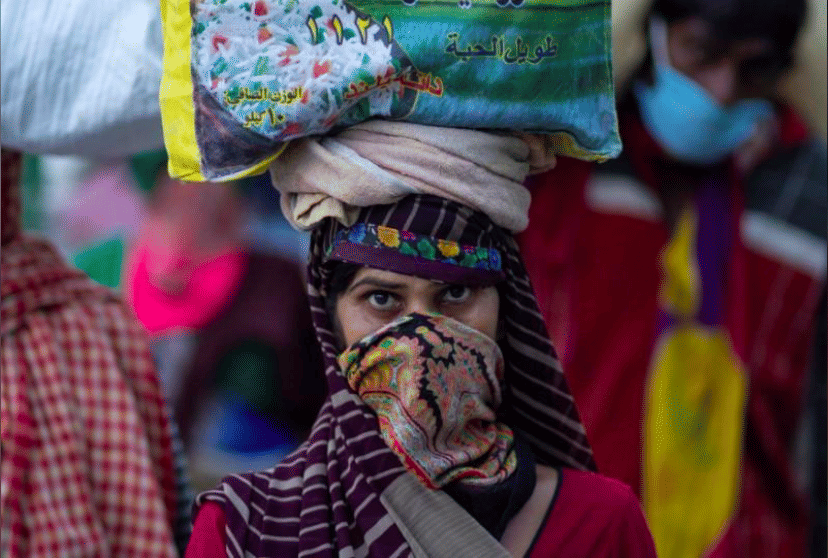
Heart-breaking images of migrants trekking home on foot have hit the world headlines, making us weep for our fellow human beings. To be robbed of dignity is to be denied the protective cover of the Preamble to the Constitution of India to which every Indian can lay claim. The author explains how the lockdown with no preparation for its impact on migrant workers, denies to them the right to livelihoods which make up the essence of the right to life.
IN every law school across the country, probably the first case, our budding lawyers study in their Constitutional Law class is, Olga Tellis & Ors Vs. Bombay Municipal Corporation & Ors [1985 SCC (3) 545]. By this historic judgment, the Supreme Court held that the right to life under Article 21 guarantees to the citizens of India the right to earn a livelihood and further that the State cannot deprive a citizen of his livelihood except in accordance with a just and fair procedure established by law.
The relevant portion of the judgment, for its sheer beauty of language and clarity of thought, is reproduced here:
"If the right to livelihood is not treated as a part of the constitutional right to live, the easiest way of depriving a person of his right to life would be to deprive him of his means of livelihood to the point of abrogation. Such deprivation would not only denude the life of its effective content and meaningfulness but it would make life impossible to live. And yet, such deprivation would not have to be in accordance with the procedure established by law, if the right to livelihood is not regarded as a part of the right to life. That, which alone makes it possible to live, leave aside what makes like livable, must be deemed to be an integral component of the right to life.
2.2 The principles contained in Articles 39(a) and 41 must be regarded as equally fundamental in the understanding and interpretation of the meaning and content of fundamental rights. If there is an obligation upon the State to secure to the citizens an adequate means of livelihood and the right to work, it would be sheer pedantry to exclude the right to livelihood from the content of the right to life. The State may not, by affirmative action, be compellable to provide adequate means of livelihood or work to the citizens.
But, any person who is deprived of his right to livelihood except according to the just and fair procedure established by law, can challenge the deprivation as offending the right to life conferred by Article 21."
One would have assumed, that when the Government of India, under the Disaster Management Act 2005, declared a countrywide lockdown, to pause the COVID-19 global pandemic, the government, would have felt obliged, under the clearly settled law of Olga Tellis, to compensate those whose livelihood would be affected by this lockdown.