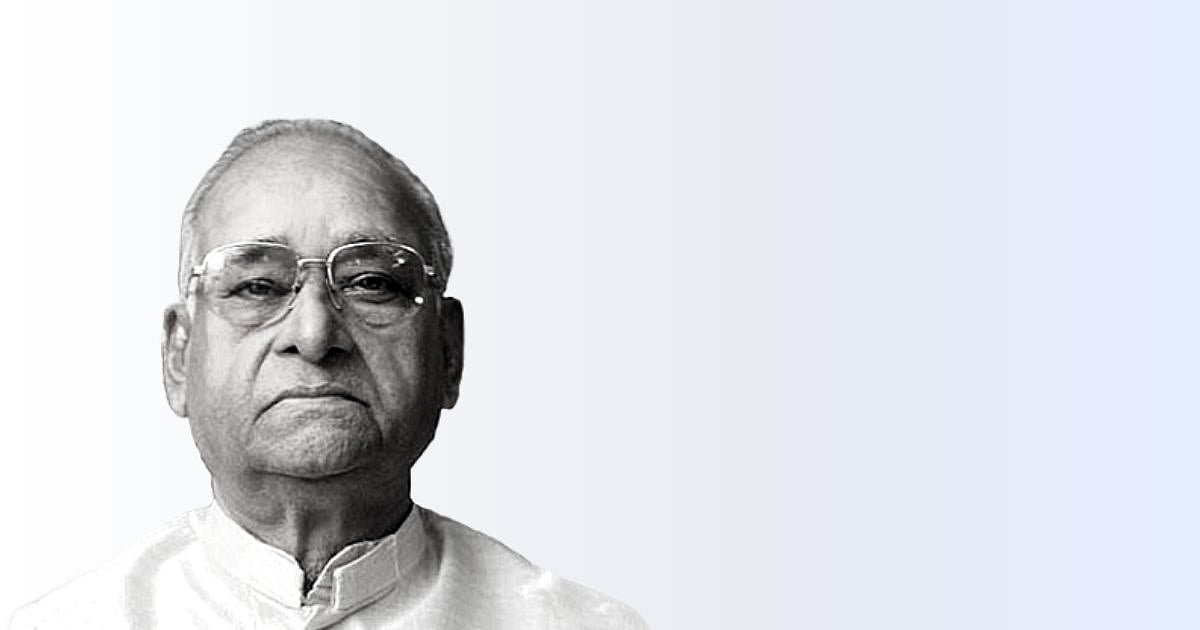
Looking back at the legacy of jurist P.P. Rao on his fourth death anniversary
Published on: 13 September 2021, 10:05 am
Pavani Parameswara Rao started his legal practice relatively late but blazed a glorious path and left an indelible imprint on the constitutional law jurisprudence in India, writes his daughter-in-law MAHALAKSHMI PAVANI.
“"To live in hearts we leave behind is not to die."– Thomas Campbell
Today marks four years since the world, and I, lost my dearest father-in-law, Pavani Parameswara Rao. His departure from this world, after a brief battle with a heart illness, was not tinged with prolonged suffering, just as he had wished for.
In the preceding five decades or so, P.P. Rao had left his mark on Indian jurisprudence as a force to reckon with in the arena of Constitutional law.
He was a man of solid principles, and believed in toiling in hard work.
His personal life was no bed of roses. From an early age, he had to face a lot of hardships, like travelling miles on foot to attend school. At a young age, he was inspired by his uncle to ditch a lucrative zamindari holding and study law for the sole reason that he felt that the legal profession would give him recognition and social standing.
Early career
After completing his studies, he began his career teaching at the Faculty of Law, Delhi University in 1961, and taught there for six years.
He was a great teacher, with prolific knowledge. Several years later, studying under his tutelage and learning from his is why I could pass my own Advocate-on-Record exam with flying colours.
During his time as a lecturer in law, he assisted the Parliamentarian, jurist and senior advocate in the Supreme Court N.C. Chatterjee in research work. They even authored a book together titled Emergency and Law, which was published in 1966.