Why the NGT’s show cause notices to IPL stadiums signal a deeper crisis in India’s Groundwater law
When the National Green Tribunal asked IPL stadiums to justify their use of groundwater, it reopened a decade-old contest between water as a human right and water as an economic commodity, one that India’s archaic groundwater laws are ill-equipped to resolve.
Published on: 26 May 2026, 07:43 am
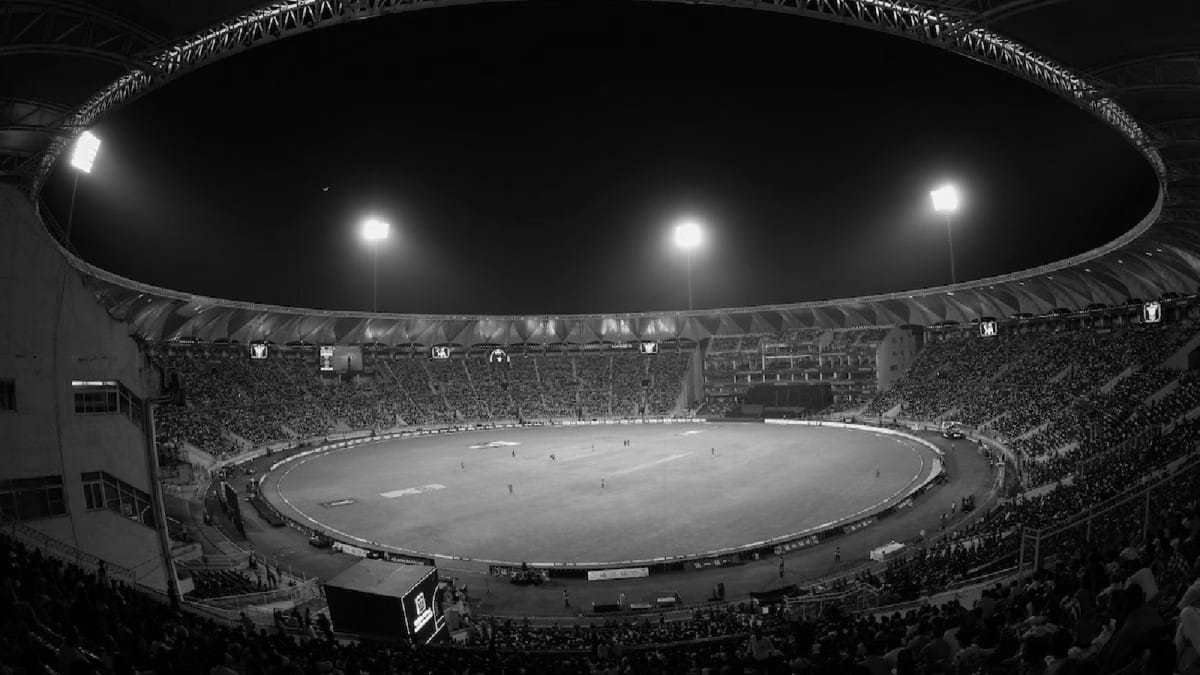
ON APRIL 23, 2026, the National Green Tribunal (‘NGT’) issued show cause notices to several major cricket stadiums hosting Indian Premier League (‘IPL’) cricket matches, asking why their activities should not be stopped in light of their alleged violation of its earlier order banning the use of groundwater for stadium upkeep.
Background
The NGT notices need to be seen and analysed in light of a Public Interest Litigation (‘PIL’) decided in 2016 by the Bombay High Court. The PIL filed by Loksatta, an organisation that focuses on democratic and institutional reforms, challenged the Board of Control of Cricket Associations (‘BCCI’) and the Cricket Associations (‘CAs’) of Mumbai, Pune and Nagpur’s use of sixty lakh litres of water for maintenance of IPL matches during a time of drought in Maharashtra when farmers were committing suicides owing to crop failures.
The BCCI defended the use of groundwater, arguing that Maharashtra generates hundred crore rupees from the IPL and that staging the tournament outside the country would inflict a significant blow to India’s GDP. The PIL framed the issue as the unfair allocation of water noting that the use of water for maintenance of cricket pitches during a time of extreme water scarcity was violative of Articles 21 (right to life) and 47 (duty of the state to ensure good nutrition). The High Court judgment, which the Supreme Court (‘SC’) upheld, resulted in shifting of thirteen of these twenty matches outside Maharashtra. The NGT’s notices should not be seen as merely routine matters rather it should be analysed as a contestation of two viewpoints that influence decision-making relating to uses and users of water: water as an economic good and the human right to water.
Criteria for allocation of water
While deciding uses and users, the ground of contestation is weighing in the human right dimension as compared to the economic or industrial rationale of treating water as an economic good. There is increasing recognition in most parts of the world that water is essential for living with dignity as it sustains activities like drinking, food production and hygiene and some water is essential for maintaining the ecosystem. Since other rights cannot be realized without access to safe water, it has been argued that water has been implicitly considered a fundamental right under the original Universal Declaration of Human Rights (1948). The guarantee of basic fundamental rights provided in the Indian Constitution is furthered in National Water Policy documents of 1987, 2002, and 2012, which accord the highest priority to drinking water and domestic consumption in terms of water allocation. This implies, arguably, that the above-mentioned uses will have priority over the economic use of water. Even in the case of international watercourse, for instance, Article 10(2) of the United Nations Water Convention, 1997 requires special regard to be given to the requirements of vital human needs by the parties to resolve the conflict between different uses of watercourse.
Scholars have pointed out that the implementation of the human right to water has not been consistent in India due to the increasing influence of a neoliberal view of water. There are elite biases in the functioning of the State, with the poor being excluded from the basic services of having some water for dignified living. The Indian State is found to be engaged in balancing a constitutional commitment of treating water as a human right with a neoliberal perspective which treats water as an economic commodity.