Why shouldn’t law hold Chief Ministers of Uttar Pradesh and Madhya Pradesh accountable for illegal demolitions?

Published on: 15 June 2022, 09:55 am
If the Chief Ministers of States blatantly support, encourage or effectively order their subordinate government officers to carry out acts which are in complete violation of law and result in major systemic human rights violations, why shouldn't they be held legally accountable for them?
—–
SUN Tzu in the 'Art of War' (written in the 6th century BC) argues that a commander's duty was to ensure that his subordinates conducted themselves in a civilised manner during an armed conflict.
This principle of 'Command Responsibility' came to be a centerpiece of international criminal law, which provides that 'commanders' should be held criminally liable for crimes committed by their subordinates. First codified in the Hague Conventions of 1899 and 1907, the legal doctrine of command responsibility was applied by the German Supreme Court in the Leipzig War Crime Trials (1921).
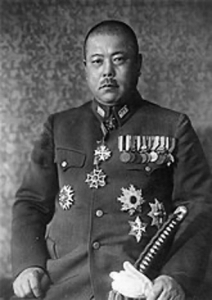
In 1945, a United States military commission expanded the scope of 'command responsibility' by including 'omission to act' within its scope, essentially making the 'Commander' responsible when he/she fails to prevent or punish his 'subordinates' for crimes committed by them (as opposed to punishing the commander when he/she ordered such crimes themselves). In this case known as In Re Yamashita, General Tomoyuki Yamashita was charged under 'command responsibility' for "unlawfully disregarding and failing to discharge his duty as a commander to control the acts of members of his command by permitting them to commit war crimes."