Partisan shadows on the Bench: Political affiliations in Judicial appointments
The issue isn’t judges’ political leanings, but whether the Collegium can create a clearer way to account for potential appointees who’ve shown prejudice against any group of citizens.
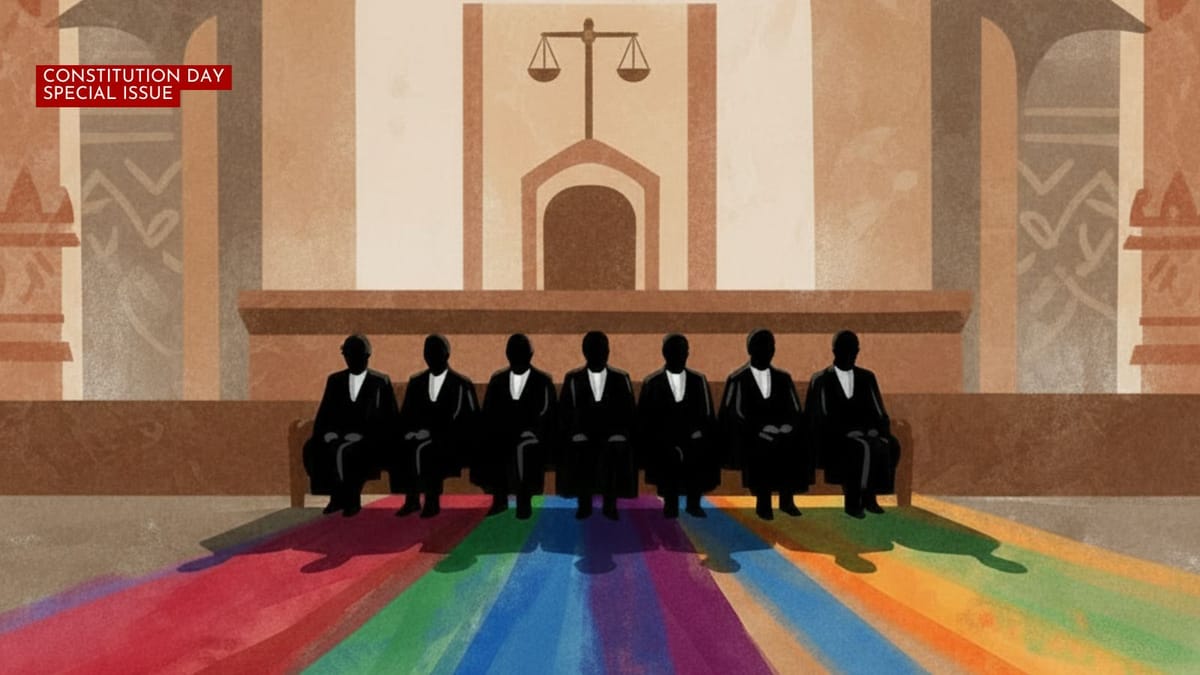
Published on: 26 November 2025, 10:01 am
THROUGH THE FIRST, SECOND AND THIRD JUDGES CASES decided in the 1980s and 1990s, the judiciary gradually reasserted its authority over judicial appointments by the creation of the Collegium system. Ever since, critics have rightly pointed out the absence of transparency in the judicial appointments process. There is a lack of clear, publicly available criteria for selection or denial of appointment and a failure to disclose reasons as to how or why a candidate is suitable for appointment or not. The critics argue that this opacity and the absence of recorded reasons have fostered a climate in which corruption and nepotism can thrive, undermining both public trust and the integrity of the system. This problem persists today.
Although the Third Judges Case had held that the inter-se seniority of Judges within their High Court and their all-India seniority should be the primary ground for appointment to the Supreme Court, other considerations, such as merit and ensuring regional, religious and gender diversity, would also be valid considerations. However, due to the continuing opacity and secrecy, the departure from the seniority rule is often a point of speculation because the reasons for it are rarely disclosed.
In this piece, we look at a particular component from the various factors the Collegium takes into consideration in appointing or denying judgeship: the political affiliation of the candidate.
Why political affiliations of judges remains of concern
Two recent examples bring the problem to the fore. In December 2024, Justice Shekhar Kumar Yadav of the Allahabad High Court spoke at a Vishwa Hindu Parishad event. Though addressing the Uniform Civil Code, he endorsed majoritarian rule and used phrases like "Humaari Gita, aapki Quran", our Bhagavad Gita and your Quran, and the derogatory term "kathmullah", used against Muslims. Following widespread outrage over his remarks, 55 Rajya Sabha MPs wrote to the Vice President, who chairs the Upper House, asking to start impeachment proceedings against the judge.
Notably, back in 2018, as a puisne judge of the Supreme Court, Justice D.Y. Chandrachud had opposed elevating advocate Yadav to the Allahabad High Court, citing Yadav’s limited experience, ties to the Rashtriya Swayamsewak Sangh (‘RSS’), and close relationship with a BJP Rajya Sabha MP who later became a Union minister. Despite these concerns, the Supreme Court Collegium- led by then Chief Justice Ranjan Gogoi had recommended Yadav’s appointment as a judge of the Allahabad High Court.
Another important example is the elevation of Justice Lekshmana Chandra Victoria Gowri to the Madras High Court in February 2023, who had openly been affiliated with the BJP and had been state in charge of its Mahila Morcha. Her appointment was challenged on this basis, and also on the basis that her statements constituted hate speech against Christians and Muslims.