“Sub judice” not a ground to curtail the right to protest a parliamentary law
Published on: 6 October 2021, 08:37 am
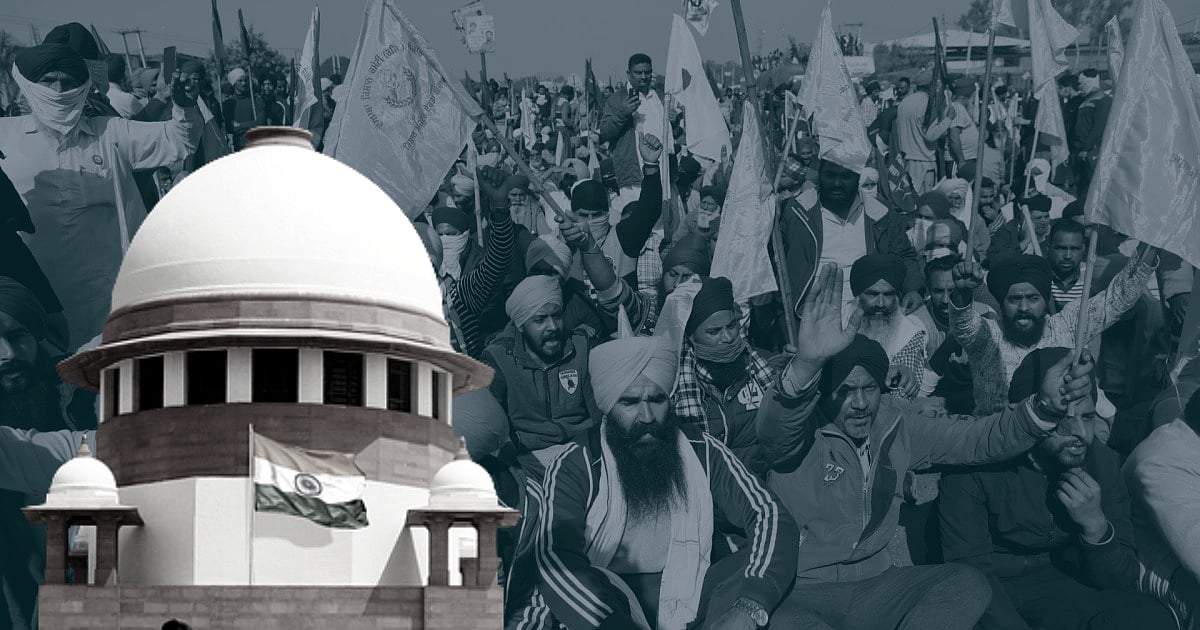
Apropos to the Supreme Court's recent order to examine the question of whether farmer groups challenging the recently enacted farm laws before the Supreme Court still have the right to protest those laws, PARAS NATH SINGH examines past Constitutional jurisprudence of the apex court to show that the question framed by the Court does not merit constitutional scrutiny.
—–
THE Supreme Court of India on October 4 said it would decide whether the right to protest was an absolute right and whether a party before it, having already invoked a legal remedy, could still protest against a matter which is sub-judice. This question was framed by a two-judge bench of Justices A.M. Khanwilkar and C.T. Ravikumar in the backdrop of a petition filed by the Kisan Mahapanchayat under Article 32 of the Indian Constitution seeking permission to hold protests at Delhi's Jantar Mantar against the newly enacted farm laws.
Background
The organization had been denied permission by the Delhi police through an order on July 4, which stated that permission could not be given because of the order/guidelines issued by the Delhi Disaster Management Authority in which all gatherings or congregations – social, political, sports, entertainment, cultural, academic, religious or festival – were prohibited till 12.07.2021. Besides, Section 144 of the Criminal Procedure Code had already been enforced in the area of New Delhi District.