How long will the Indian poor be invisible?
Published on: 14 August 2020, 01:40 pm
The narrative of development is often lost in nationalistic fervor. The Indian poor are invisibilized in the progress of the rich. The author narrates how India has let down its poor citizen in the context of the migrant labor crisis during coronavirus pandemic.
———
I have often wondered how little of our public discourse is about the poor and the lives they lead. Considering the vast number of people who eke out an existence in our country that bears comparison with the lives of people from the most deprived regions of the world, there is very little discussion and debate in the media about t our poorest citizens and their concerns.
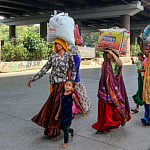
A classic expression of this invisibility of the poor for our media and the people who wield power at different levels and positions is the reference to "migrant workers" that briefly dominated our discourse in recent times.
It was remarkable that urban, educated citizens who used the term made no mention of their own relationship to these "migrant workers". After all, it was their services that had enriched and enlivened their existence for so long. They cleaned our homes, they cooked our food, they ironed our clothes, they kept our malls and theatres gleaming. Ironically, we still did not feel any personal connection with these people as individuals.
It was ok for all of us to just label them as "migrant workers" and take shelter in the political correctness of this term since it might so easily have been, "these poor people".
My experience as a writer has brought me against a wall of indifference for the plight of the poor in more ways than one over the years. The present has only highlighted what I knew for a long time.
On the 10th of May, 2020, I met a young man walking from where I live in Maharashtra to his home in Chhattisgarh. He was wheeling a suitcase and walking in the scorching sunlight, with a bird on his shoulder.
I had stepped out during the lockdown for a grocery and vegetables run. Having just picked up some fruits, I was about to start the car for my next stop when I saw, in my rear-view mirror, a group of men, women and children walking with their luggage. I got out of the car and spoke to the young man walking at the head of the group. When I learned of their destination, I was disoriented for a few moments. Was there even a road to Chhattisgarh in the direction these people were travelling? There was a female blossom headed parakeet on his shoulder, hanging on grimly, just as the young man and his companions were, to a reality that seemed macabre beyond belief.