Emergency Message for Modi Regime: Don’t Take People for Granted
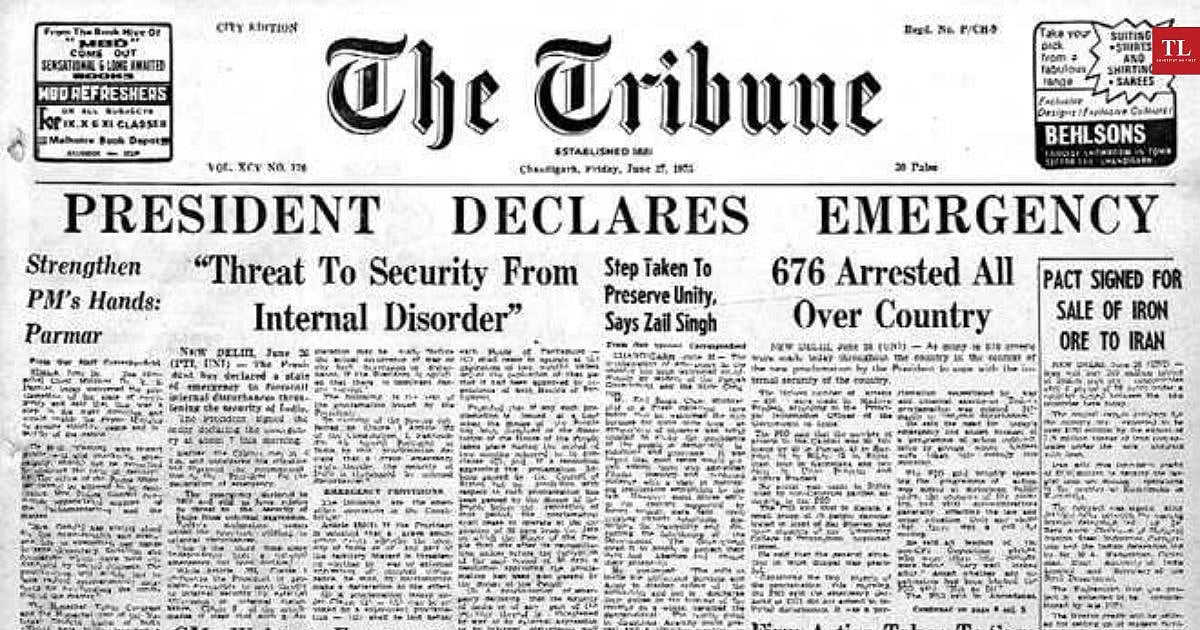
Published on: 26 June 2021, 07:00 am
The tendency to underestimate people, see their trust as gullibility is not new. The Indira Gandhi regime made this mistake during the Emergency era, and today the Modi-Shah regime seems to underrate the capacity of the Indian people. Perfectly capable of evaluating the intent and outcome of any government, people ask hard questions of themselves and ruling regimes all the time. If their sheer common sense ended authoritarianism before, it can happen again, writes AJAY GUDAVARTHY.
—–
THE Emergency of 1975 evokes collective memory of the crisis of the nation-state. However, the nature of that crisis differs, depending on how people relate to the idea of a nation. What cannot be denied about the Emergency and its aftermath is how "common sense" prevailed over propaganda. In a manner much too similar to today, a false perception was propagated of a threat to the "unity and integrity" of the nation to cover up economic failures, unemployment, corruption, political instability and a looming crisis of legitimacy.
The Emergency etched in our collective memory how abuse of power can protect narrow private and political interests. How the ideals of nationalism can be mobilised to suspend civil rights, and a threat perception created to pamper the insecurities of the ruling elite. All these are collective lessons the nation learnt from that period.
Yet, the Emergency also reminds us how the robust common sense of a semi-literate population prevailed over the empty rhetoric of the ruling elite. The will to protest over-shadowed the conspiracy to intimidate and eliminate those opposed to the regime. Our understanding of the past is relevant now as we strive to make sense of the future that awaits us. Is India moving towards yet another Emergency? Is it a real-time possibility?
Under the current regime, India has had conditions of exceptionalism of the Emergency kind. The looming possibility of a formal Emergency with the dwindling popularity of the leader is a notion lost on nobody. However, like Mrs Gandhi, the current leader and the RSS assess "the people" poorly. They understand the cultural ethos and symbolic lifeworld of "the people", but they underestimate those very people.
Simply put, the Modi-Shah duo and the RSS think protest and resistance are only superficial aspects of Indian society. At all other levels, they believe, Indians are more inclined to loyalty, faith and trust.
They feel Indian society suffers from illiteracy and localised thinking, which reminds of the Ambedkar remark that Indian villages are "a sink of localism, den of ignorance". Yet, it was the same people who had voted Indira Gandhi out of power in 1977. How does one explain this? Yes, there is ignorance and isolationism, yet people restored democracy, resisted demagoguery and halted the overtures to authoritarianism. It, indeed, is an intriguing facet of Indian society and democracy.