Taking constitutional values to the grassroots
Sambhaji Bhagat, the most popular Lokshahir (people’s balladeer) of Maharashtra, writes about his experiment of getting the common man to defend the Constitution by taking its values to the people in innovative ways.
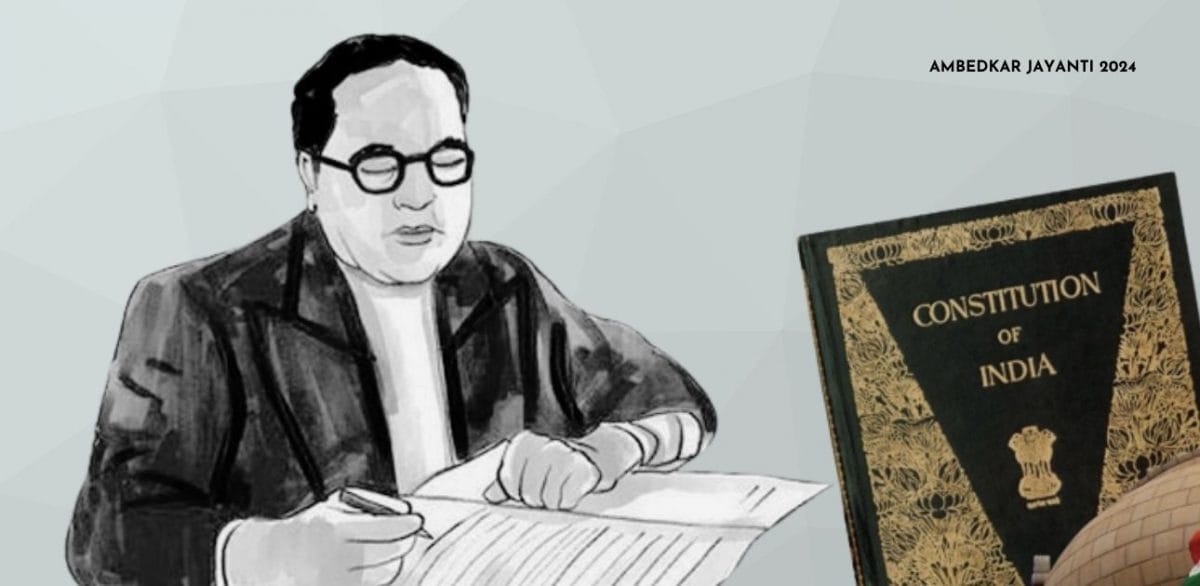
Published on: 14 April 2024, 07:50 am
Sambhaji Bhagat, the most popular Lokshahir (people's balladeer) of Maharashtra, writes about his experiment of getting the common man to defend the Constitution by taking its values to the people in innovative ways.
—
I come from Panchgani, where my father was a cobbler. I came to Mumbai for higher studies in the 1970s and was soon faced with two streams of thought and action— on one side Ambedkarism and on the other side Marxism.
At the time, there was a vibrant, militant student movement in Mumbai post-Emergency and I came in contact with people from different Left-leaning student organisations and a street-play group called Aavhaan Natya Manch.
Most of these students were from privileged backgrounds but I found them to be completely honest. They did not shrink from making sacrifices for the causes in which they believed. During my association with them, I discovered the vastness of the world, how it works and who runs it.
I stayed in Siddharth Vihar, the famous students' hostel attached to Ambedkar College at Wadala in Central Mumbai, the nerve centre of Dalit politics at that time.
“At the time, there was a vibrant, militant student movement in Mumbai post-Emergency and I came in contact with people from different Left-leaning student organisations and a street play group called Aavhaan Natya Manch.
In my early days at Siddharth Vihar, I experienced the power of revolt— because those were the heydays of the Dalit Panthers. But I witnessed the movement fizzle out.
By then, I had started reading the works of Dr B.R. Ambedkar and I felt that the Dalit Panthers were not following Ambedkar, they were not on track. On the other hand, I started reading Karl Marx, Friedrich Engels, Vladimir Lenin, Mao Zedong and other such writers and came to realise that the way Indian Marxists were working, they too were not on track.
So that was my problem and at that time, I did not have clarity as to what I should do personally. I spent about 16 years in this dilemma! But those 16 years taught me Marx and Ambedkar; taught me how to fight, and against and for whom to fight. I found that there existed no real mass movement and no ideological clarity in India.